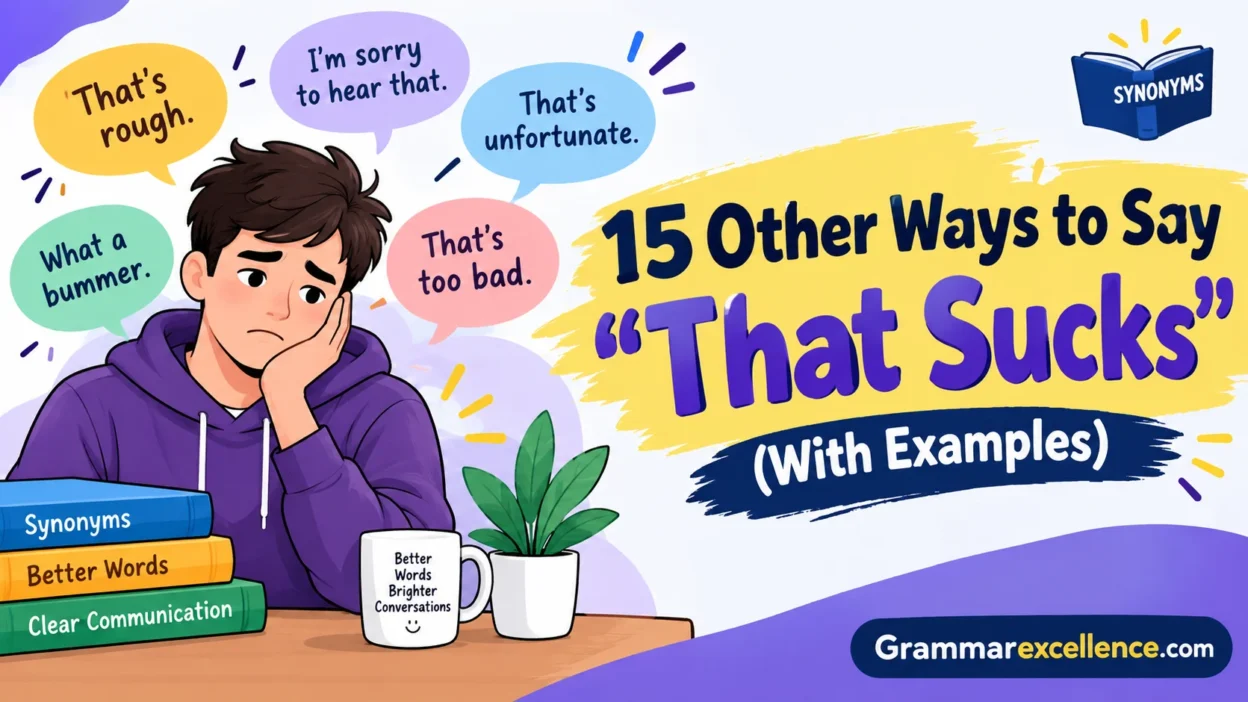
That Sucks is a common casual phrase used in everyday conversations when something goes wrong. People often use it to show disappointment, frustration, sympathy, or concern after hearing bad news or learning about a tough situation. It feels natural among friends, but the phrase can sometimes sound harsh, insensitive, or too casual.
In more professional situations, workplace communication, emails, or academic writing, choosing a different expression can create a more polished and respectful tone. Alternatives such as “That’s unfortunate” can communicate empathy, compassion, and understanding without sounding dismissive or rude. The right wording depends on the context, the relationship between people, and the emotions involved.
From my experience, thoughtful communication becomes more effective when you consider tone, clarity, and intent before responding. When someone shares something difficult, a warm response can show care, express sympathy, and offer genuine support. Using varied expressions instead of relying on one generic phrase can make conversations feel more personal, genuine, authentic, and meaningful.
What Does “That Sucks” Mean?
“That sucks” is an informal expression used to show that you think a situation is bad, disappointing, unpleasant, or unfortunate. For example, if a friend says they missed an important appointment because their car broke down, you might respond, “That sucks.” The phrase usually communicates sympathy or disappointment rather than literally referring to sucking. It is common in spoken English, texting, social media, and conversations between friends. Because “sucks” is informal slang, the expression can sound too casual in professional or formal situations.
Common Situations Where “That Sucks” Is Used
People commonly say “That sucks” when reacting to bad news, an inconvenience, disappointment, or an unfortunate experience. It can appear in text messages, everyday conversations, social media comments, and personal communication.
For example, a friend might tell you that their flight was canceled, and you could say, “That sucks.” Someone might also use it after hearing about a difficult day at work or an unexpected problem.
The phrase is generally more appropriate when talking with friends, family members, or people you know well. In customer communication, workplace conversations, school settings, or formal writing, a more considerate expression may communicate the same feeling without sounding overly casual.
Is It Professional or Polite to Say “That Sucks”?
“That sucks” is casual and informal, rather than professional or formal. It is not necessarily rude among friends, but the word “sucks” is slang and can sound blunt in professional communication. With a close friend, it can actually sound natural and sympathetic.
If someone is sharing serious or sensitive news, expressions such as “I’m sorry to hear that” or “That sounds really difficult” may show greater empathy. In workplace emails or customer communication, a more measured expression is usually safer.
Advantages and Disadvantages of Saying “That Sucks”
Advantages
The biggest advantage is simplicity. “That sucks” is short, natural, and immediately communicates that you recognize something unpleasant happened. It can also create a sense of familiarity and solidarity between friends. In casual conversation, its directness can make your response feel spontaneous rather than overly formal.
Disadvantages
The main limitation is its informal tone. It may sound too casual when someone is discussing a serious problem, and it can be unsuitable for professional communication. It also does not explain exactly what you feel; depending on the situation, you may want to express sympathy, disappointment, concern, or frustration more precisely.
Synonyms For “That Sucks”
- That’s unfortunate
- I’m sorry to hear that
- That’s too bad
- That’s disappointing
- That’s rough
- That sounds difficult
- I hate to hear that
- That must be frustrating
- What a shame
- That’s really unfortunate
- I’m sorry you’re dealing with that
- That sounds awful
- That’s a tough break
- I can see why you’re upset
- That’s not good
1. That’s unfortunate
Meaning
“That’s unfortunate” expresses sympathy or disappointment about an unpleasant situation. It is a more polished and neutral alternative to “That sucks.”
Definition
It means that something happened that is unlucky, undesirable, or disappointing.
Detailed Explanation
This expression is useful when you want to acknowledge bad news without sounding overly emotional. Unlike “That sucks,” it works comfortably in many professional and everyday situations. It can communicate sympathy while maintaining some emotional distance. It is especially useful when you do not know the person very well.
Scenario Examples
Scenario: A colleague tells you that an important meeting was canceled.
Example: “That’s unfortunate. I know you spent a lot of time preparing for it.”
Scenario: A neighbor tells you their vacation plans fell through.
Example: “That’s unfortunate. Hopefully you can rearrange everything.”
Best Use
Best for professional conversations, polite messages, and everyday communication.
Tone
Tone: Polite, neutral, respectful. It sounds considerate without being highly emotional.
2. I’m sorry to hear that
Meaning
“I’m sorry to hear that” expresses sympathy when someone shares bad or upsetting news.
Definition
A polite expression used to show sympathy and concern about another person’s difficult experience.
Detailed Explanation
This phrase focuses more on the person’s feelings than on judging the situation itself. It is warmer than “That’s unfortunate” and can be used in both personal and professional settings. It is particularly appropriate when someone has experienced loss, disappointment, illness, conflict, or another serious difficulty.
Scenario Examples
Scenario: A coworker says they had a difficult family situation.
Example: “I’m sorry to hear that. I hope things get better soon.”
Scenario: A friend says they did not get the job they wanted.
Example: “I’m sorry to hear that. You really wanted that position.”
Best Use
Best for sympathetic conversations, emails, workplace communication, and personal messages.
Tone
Tone: Warm, respectful, empathetic. It clearly shows that you care about the other person’s situation.
3. That’s too bad
Meaning
“That’s too bad” is a common way to express mild sympathy or disappointment.
Definition
An informal-to-neutral expression meaning that something is unfortunate or disappointing.
Detailed Explanation
This phrase is a natural everyday alternative to “That sucks.” It is less slangy and generally softer. It works especially well for relatively minor disappointments, although context can make it appropriate for more serious situations too. For very sensitive news, a warmer response may be better.
Scenario Examples
Scenario: Your friend misses the last bus home.
Example: “That’s too bad. Do you want me to pick you up?”
Scenario: A classmate says the event was canceled.
Example: “That’s too bad. I was looking forward to it.”
Best Use
Best for casual conversation, texting, and everyday situations.
Tone
Tone: Casual, sympathetic, gentle. It sounds natural without the slang of “That sucks.”
4. That’s disappointing
Meaning
“That’s disappointing” directly expresses a feeling of disappointment about an outcome.
Definition
A statement showing that something did not happen as hoped, expected, or desired.
Detailed Explanation
This alternative is more specific than “That sucks” because it focuses on disappointment. It works well when plans fail, expectations are not met, or a result is worse than hoped. It can also be used professionally because it does not rely on slang.
Scenario Examples
Scenario: A customer discovers that an event has been canceled.
Example: “That’s disappointing. I know many people were looking forward to it.”
Scenario: A student receives a lower grade than expected.
Example: “That’s disappointing, especially after all the work you put in.”
Best Use
Best for workplace conversations, school, personal communication, and polite disagreement.
Tone
Tone: Direct, measured, sympathetic. It clearly communicates disappointment without sounding aggressive.
5. That’s rough
Meaning
“That’s rough” is a casual expression showing sympathy for someone going through a difficult experience.
Definition
An informal way to say that something is difficult, unpleasant, or hard to deal with.
Detailed Explanation
This phrase is closer in casual feeling to “That sucks.” It often sounds supportive without becoming overly serious. It is especially natural when a friend describes a stressful day, difficult situation, or series of unfortunate events. Because it is informal, it is less suitable for formal professional writing.
Scenario Examples
Scenario: Your friend tells you they worked a 12-hour shift.
Example: “That’s rough. You must be exhausted.”
Scenario: Someone tells you their computer crashed before an assignment deadline.
Example: “That’s rough. Did you manage to recover the file?”
Best Use
Best for friends, texting, casual conversations, and informal social communication.
Tone
Tone: Casual, sympathetic, supportive. It feels friendly rather than formal.
6. That sounds difficult
Meaning
“That sounds difficult” acknowledges that someone is facing a challenging situation.
Definition
A sympathetic expression indicating that another person’s circumstances appear challenging or emotionally demanding.
Detailed Explanation
This phrase focuses on the difficulty of the experience rather than simply calling the situation bad. It is gentler and more empathetic than “That sucks.” It is also suitable when you do not know all the details and want to avoid making assumptions.
Scenario Examples
Scenario: A coworker explains that they are managing a complicated project.
Example: “That sounds difficult. Let me know if I can help.”
Scenario: A friend talks about a stressful personal situation.
Example: “That sounds difficult. I hope things become easier for you.”
Best Use
Best for supportive conversations, workplace communication, counseling-style conversations, and personal messages.
Tone
Tone: Gentle, empathetic, respectful. It recognizes difficulty without exaggerating the situation.
7. I hate to hear that
Meaning
“I hate to hear that” shows strong personal sympathy when someone tells you something unpleasant.
Definition
A warm expression meaning that you feel sad or concerned about hearing someone’s bad news.
Detailed Explanation
This expression sounds more emotionally involved than “That’s unfortunate.” It communicates that you genuinely dislike knowing the person is experiencing something difficult. It is particularly natural in personal conversations. Because it expresses a personal emotional reaction, it may feel less appropriate in highly formal situations.
Scenario Examples
Scenario: A friend says their pet is seriously ill.
Example: “I hate to hear that. I know how much your dog means to you.”
Scenario: A colleague says their plans were disrupted by an emergency.
Example: “I hate to hear that. I hope everything is okay now.”
Best Use
Best for personal conversations, supportive messages, and close relationships.
Tone
Tone: Warm, caring, emotional. It conveys genuine sympathy.
8. That must be frustrating
Meaning
“That must be frustrating” recognizes that a situation is likely causing someone irritation or disappointment.
Definition
A sympathetic expression acknowledging that something is annoying, difficult, or disappointing to experience.
Detailed Explanation
This phrase is more precise than “That sucks” because it identifies frustration as the likely emotion. It is useful when someone has repeatedly encountered a problem or has been prevented from achieving something. The word “must” makes it a gentle inference rather than a claim that you know exactly how they feel.
Scenario Examples
Scenario: A customer has repeatedly tried to resolve a billing problem.
Example: “That must be frustrating. Let’s see what we can do to resolve it.”
Scenario: Your friend keeps getting technical errors while working.
Example: “That must be frustrating after spending so much time on it.”
Best Use
Best for customer communication, workplace conversations, and supportive personal conversations.
Tone
Tone: Empathetic, professional, understanding. It acknowledges someone’s frustration without sounding overly casual.
9. What a shame
Meaning
“What a shame” expresses regret or disappointment about an unfortunate outcome.
Definition
An expression of sympathy or regret when something desirable does not happen.
Detailed Explanation
This phrase is especially useful for missed opportunities, canceled plans, and disappointing outcomes. It can sound warm and natural without being slangy. Depending on delivery, it can also sound slightly more traditional than “That sucks,” particularly in formal British English contexts.
Scenario Examples
Scenario: A friend cannot attend a concert because they are sick.
Example: “What a shame. You were really excited about it.”
Scenario: A school event is canceled because of bad weather.
Example: “What a shame. The students had prepared for weeks.”
Best Use
Best for everyday conversation, polite reactions, and personal messages.
Tone
Tone: Sympathetic, gentle, slightly traditional. It expresses regret without sounding dramatic.
10. That’s really unfortunate
Meaning
“That’s really unfortunate” expresses stronger sympathy than the shorter “That’s unfortunate.”
Definition
A polite expression describing something as particularly unlucky, disappointing, or undesirable.
Detailed Explanation
Adding “really” gives the expression more emotional weight. It can be used when something has caused significant inconvenience or disappointment. It remains much more polished than “That sucks,” making it useful when you want to sound considerate without becoming overly formal.
Scenario Examples
Scenario: A business owner learns that an important shipment was lost.
Example: “That’s really unfortunate. I hope the issue can be resolved quickly.”
Scenario: A friend misses an important family event because of travel problems.
Example: “That’s really unfortunate. You must be disappointed.”
Best Use
Best for professional communication, customer interactions, and serious everyday situations.
Tone
Tone: Polite, concerned, measured. The word “really” adds emphasis while keeping the expression respectful.
11. I’m sorry you’re dealing with that
Meaning
“I’m sorry you’re dealing with that” shows sympathy for an ongoing or difficult situation.
Definition
A supportive expression acknowledging that someone is having to cope with a problem or hardship.
Detailed Explanation
This phrase is more personal than simply saying “That’s unfortunate.” It recognizes that the person has to deal with the consequences of the situation. It works particularly well when the problem is ongoing rather than a single disappointing event. It is a useful choice when you want your response to sound caring and supportive.
Scenario Examples
Scenario: A coworker has been dealing with repeated technical problems.
Example: “I’m sorry you’re dealing with that. Hopefully the issue gets fixed soon.”
Scenario: A friend is handling a stressful situation at home.
Example: “I’m sorry you’re dealing with that. If you need someone to talk to, I’m here.”
Best Use
Best for personal messages, supportive conversations, and empathetic workplace communication.
Tone
Tone: Warm, compassionate, supportive. It centers attention on the person’s experience.
12. That sounds awful
Meaning
“That sounds awful” expresses a strong negative reaction to something unpleasant.
Definition
An informal expression indicating that a situation sounds very unpleasant, painful, or difficult.
Detailed Explanation
This is stronger than “That’s too bad” because “awful” communicates a greater degree of negativity. It can be appropriate when someone describes a genuinely unpleasant experience. However, its emotional strength means you should use it carefully when you do not know how serious the situation actually is.
Scenario Examples
Scenario: A friend describes being stranded at an airport overnight.
Example: “That sounds awful. Were you able to get some rest?”
Scenario: Someone describes a very stressful experience.
Example: “That sounds awful. I’m glad you’re okay now.”
Best Use
Best for casual conversations, personal messages, and strong expressions of sympathy.
Tone
Tone: Emotional, sympathetic, direct. It strongly communicates that the situation sounds unpleasant.
13. That’s a tough break
Meaning
“That’s a tough break” is an informal expression used when someone experiences bad luck or an unfortunate setback.
Definition
A phrase meaning that someone has experienced a particularly unlucky or disappointing setback.
Detailed Explanation
This expression is more idiomatic than “That sucks.” It often suggests that the person did not necessarily cause the problem and was simply unlucky. It is especially natural when someone loses an opportunity, encounters an unexpected setback, or suffers bad luck. It is generally unsuitable for highly formal writing.
Scenario Examples
Scenario: An athlete gets injured just before an important competition.
Example: “That’s a tough break. You had trained so hard for this.”
Scenario: Someone’s flight is canceled after they have already reached the airport.
Example: “That’s a tough break. Hopefully they can put you on another flight.”
Best Use
Best for casual conversation, sports, friendly messages, and discussions about bad luck.
Tone
Tone: Casual, sympathetic, encouraging. It recognizes a setback while maintaining a conversational feel.
14. I can see why you’re upset
Meaning
“I can see why you’re upset” validates another person’s emotional reaction to a difficult situation.
Definition
A supportive statement acknowledging that someone’s feelings are understandable given what happened.
Detailed Explanation
This expression does more than say that something is bad; it recognizes the person’s emotional response. It is useful when someone is angry, disappointed, hurt, or frustrated. Unlike “That sucks,” it focuses on understanding the person, which can make it a better choice during sensitive conversations.
Scenario Examples
Scenario: A customer receives the wrong product after waiting several weeks.
Example: “I can see why you’re upset. You expected the correct order to arrive.”
Scenario: A friend discovers that someone canceled important plans at the last minute.
Example: “I can see why you’re upset. You had arranged your whole day around it.”
Best Use
Best for conflict resolution, customer communication, personal conversations, and emotionally sensitive situations.
Tone
Tone: Empathetic, validating, calm. It recognizes someone’s feelings without escalating the situation.
15. That’s not good
Meaning
“That’s not good” is a simple way to indicate concern or disapproval about a situation.
Definition
A straightforward expression meaning that something is bad, undesirable, or concerning.
Detailed Explanation
This is one of the simplest alternatives and can fit many everyday situations. It is less emotional than “That sounds awful” and less slangy than “That sucks.” However, it can be vague, so it may not communicate much sympathy by itself. Adding a second sentence can make the response more supportive.
Scenario Examples
Scenario: A coworker tells you that the office system is down.
Example: “That’s not good. We have several deadlines today.”
Scenario: A friend says they lost their wallet.
Example: “That’s not good. Have you checked where you last used it?”
Best Use
Best for everyday conversation, workplace discussions, and situations where you want a simple reaction.
Tone
Tone: Neutral, direct, concerned. Its simplicity makes it versatile, although additional context may be needed.
FAQs
Q1. What is another way to say “That sucks”?
Natural alternatives include “That’s unfortunate,” “That’s too bad,” “I’m sorry to hear that,” “That’s disappointing,” and “That sounds difficult.” The best choice depends on whether you want to sound casual, sympathetic, professional, or emotionally supportive.
Q2. What does “That sucks” mean?
“That sucks” is an informal expression used to show that something is bad, disappointing, unpleasant, or unfortunate. It is often used as a quick sympathetic response when someone shares bad news.
Q3. Is “That sucks” professional?
Generally, “That sucks” is not a professional expression because “sucks” is informal slang. It can be perfectly natural among friends but may sound too casual in a workplace, customer-service setting, formal email, or other professional communication.
Q4. What is a more polite way to say “That sucks”?
“I’m sorry to hear that” is one of the most versatile polite alternatives. “That’s unfortunate” is another good choice when you want a neutral and respectful response.
Q5. Which alternative works best in formal communication?
For formal or professional situations, “That’s unfortunate,” “I’m sorry to hear that,” or “That’s disappointing” usually fits better than “That sucks.” Choose according to the situation: “I’m sorry to hear that” emphasizes sympathy, while “That’s unfortunate” sounds more neutral.
Conclusion
That Sucks is useful in casual conversations, but the right expression depends on the context, tone, and relationship between people. Choosing more empathetic, thoughtful, and compassionate words can help you show care, express sympathy, and offer genuine support when someone experiences something difficult.