Sit Back And Relax is a simple phrase that brings comfort, calmness, and reassurance into everyday English. It can help people stop worrying, take a break, and unwind when they need a peaceful moment. In casual conversations and friendly chats, this expression can sound warm, personal, and thoughtful, especially when speaking with friends or guests. From my experience with writing skills and speaking skills, choosing the right words can make a big difference in communication, helping a message feel more natural and meaningful.
Using different phrase alternatives can also improve language fluency and prevent a widely used expression from becoming repetitive or overused. In professional settings, presentations, emails, and other forms of Writing, a more polished expression may fit better than an informal phrase. In contrast, social interaction, social media, and relaxed verbal conversations often allow creative alternatives such as take it easy or make yourself comfortable. These choices can enhance your tone, show emotional intelligence, and help your message fit the context while allowing you to express care and offer emotional support naturally.
What Does “Sit Back And Relax” Mean?
“Sit back and relax” is an expression that tells someone to stop worrying, become comfortable, and take things easy. Literally, it can suggest leaning back in a chair and resting, but in everyday English it is usually figurative. For example, someone might say it before taking over a task: “Don’t worry about the presentation; sit back and relax.” The phrase communicates reassurance, comfort, and a temporary break from effort or stress.
Common Situations Where “Sit Back And Relax” Is Used
People commonly use this phrase in casual conversation, text messages, advertising, entertainment, hospitality, and personal communication. A friend might say it when they want you to stop worrying, while someone hosting a guest might use it to encourage them to feel comfortable. Businesses can also use similar wording when describing a relaxing service or experience.
The phrase is generally more natural in spoken and informal communication than in highly formal writing. Depending on the situation, an alternative may sound more professional, caring, elegant, or specific.
Is It Professional or Polite to Say “Sit Back And Relax”?
“Sit back and relax” is polite and friendly, but it is generally casual rather than formal. It works well when speaking to friends, family members, customers in a relaxed setting, or colleagues with whom you have an informal relationship. In a formal business email, however, wording such as “Please take a moment to relax” or “Please make yourself comfortable” may sound more appropriate.
Context matters. When used sincerely, the phrase can feel reassuring. However, telling someone to relax when they are genuinely upset or under pressure can occasionally sound dismissive, so the speaker should consider the person’s situation and tone.
Advantages and Disadvantages of Saying “Sit Back And Relax”
Advantages
The expression is short, familiar, and easy to understand. It creates a relaxed atmosphere and can reassure someone that they do not need to handle everything themselves. It can also sound welcoming when used with guests or customers.
Disadvantages
Because it is quite common, the phrase can sometimes feel routine or conversational rather than carefully chosen. In a serious situation, telling someone to “relax” may also be misunderstood as minimizing their concerns. For formal communication, a more specific or respectful expression may communicate the intended message better.
Synonyms For “Sit Back And Relax”
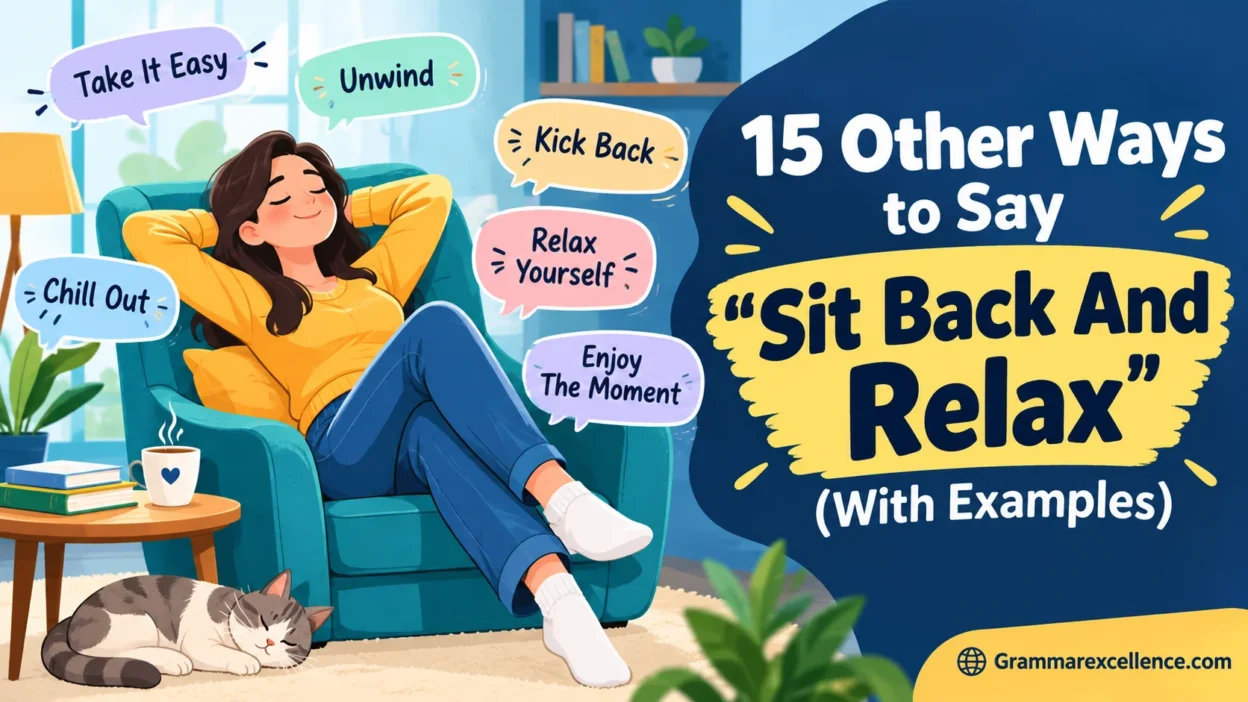
- Take it easy
- Make yourself comfortable
- Take a load off
- Unwind and relax
- Put your feet up
- Take a breather
- Rest and recharge
- Take some time to yourself
- Let yourself relax
- Enjoy some downtime
- Kick back and relax
- Take a moment to breathe
- Leave your worries behind
- Enjoy the moment
- Let your mind rest
1. Take it easy
Meaning
“Take it easy” means to relax, avoid unnecessary stress, or slow down.
Definition
It is a friendly expression used to encourage someone to rest or avoid putting too much pressure on themselves.
Detailed Explanation
This phrase is one of the closest casual alternatives to “sit back and relax.” It can refer to physical rest, a slower pace, or simply not worrying too much. It is especially natural in everyday conversation. Unlike the original phrase, it can also be used as a casual goodbye.
Scenario Examples
Scenario: Your friend has been working all weekend.
Example: “You’ve done enough for today. Take it easy tonight.”
Scenario: Someone is recovering from a tiring day.
Example: “You don’t need to rush tomorrow. Just take it easy.”
Best Use
Best for casual conversation, texting, friendly messages, and everyday advice.
Tone
Tone: Casual, friendly, reassuring. It sounds natural between people who are comfortable with each other.
2. Make yourself comfortable
Meaning
“Make yourself comfortable” means to settle into a place and feel relaxed.
Definition
It is an invitation for someone to get comfortable and feel at ease.
Detailed Explanation
This expression focuses more on comfort and hospitality than on simply stopping work. It is particularly useful when welcoming someone into your home, office, hotel room, or another place. It can sound more polite and professional than “sit back and relax.”
Scenario Examples
Scenario: A guest arrives at your home.
Example: “Come in and make yourself comfortable.”
Scenario: A client is waiting in an office.
Example: “Your meeting will begin shortly. Please make yourself comfortable.”
Best Use
Best for hospitality, customer service, professional settings, and welcoming guests.
Tone
Tone: Warm, polite, welcoming. It is suitable for both personal and professional situations.
3. Take a load off
Meaning
“Take a load off” means to sit down and rest after being busy or tired.
Definition
It is an informal expression encouraging someone to stop working and rest for a while.
Detailed Explanation
This phrase has a distinctly casual and conversational feel. It often suggests that someone has been carrying a physical or mental “load” and deserves a break. It is less suitable for formal communication than “make yourself comfortable.”
Scenario Examples
Scenario: Your friend comes home after a long shift.
Example: “You look exhausted. Take a load off while I make dinner.”
Scenario: Someone is helping with a house project.
Example: “You’ve been working for hours. Take a load off.”
Best Use
Best for friends, family, informal conversations, and relaxed social situations.
Tone
Tone: Very casual, friendly, and conversational. It can sound particularly natural in spoken English.
4. Unwind and relax
Meaning
“Unwind and relax” means to release tension and become calm after stress or activity.
Definition
It describes taking time to recover mentally and physically from pressure or busyness.
Detailed Explanation
This wording emphasizes reducing stress rather than simply sitting down. It is useful when discussing evenings, holidays, weekends, vacations, or activities designed to help someone recover. Compared with “sit back and relax,” it places more emphasis on emotional and mental relief.
Scenario Examples
Scenario: A hotel promotes its spa.
Example: “Spend the afternoon at the spa and unwind and relax.”
Scenario: You are recommending a quiet evening to a friend.
Example: “Turn off your phone, make some tea, and unwind and relax.”
Best Use
Best for wellness content, personal messages, travel, lifestyle writing, and relaxation advice.
Tone
Tone: Calm, soothing, thoughtful. It has a slightly more polished feel than “sit back and relax.”
5. Put your feet up
Meaning
“Put your feet up” means to sit or lie comfortably and rest.
Definition
It is an informal expression for taking a comfortable break after effort or work.
Detailed Explanation
The expression creates a vivid picture of someone physically resting with their feet raised. It usually implies that the person has earned a break after being busy. It is more informal and homely than the original phrase.
Scenario Examples
Scenario: Someone finishes cleaning the house.
Example: “Everything looks great. Now put your feet up.”
Scenario: Your partner returns from work.
Example: “Dinner is almost ready. Put your feet up for a while.”
Best Use
Best for home life, family conversations, close relationships, and casual speech.
Tone
Tone: Warm, informal, caring. It often sounds affectionate when used with someone close to you.
6. Take a breather
Meaning
“Take a breather” means to pause for a short time and rest.
Definition
It means to stop what you are doing temporarily so you can recover or clear your head.
Detailed Explanation
Unlike “sit back and relax,” this expression usually suggests a short break rather than extended relaxation. It is useful when someone has been working, arguing, studying, or dealing with pressure. It can also imply creating enough space to think more clearly.
Scenario Examples
Scenario: Two coworkers have been working continuously.
Example: “We’ve been at this for three hours. Let’s take a breather.”
Scenario: A student feels overwhelmed while studying.
Example: “Close the book for ten minutes and take a breather.”
Best Use
Best for work, studying, stressful situations, exercise, and everyday conversation.
Tone
Tone: Casual, supportive, practical. It focuses on taking a short pause.
7. Rest and recharge
Meaning
“Rest and recharge” means taking time to recover energy and prepare to continue.
Definition
It refers to physical or mental recovery after effort, stress, or prolonged activity.
Detailed Explanation
This phrase suggests more than simply becoming comfortable. “Recharge” implies restoring energy, motivation, or focus. It is particularly useful when talking about weekends, vacations, breaks, or personal wellbeing.
Scenario Examples
Scenario: A colleague is taking a weekend off.
Example: “Enjoy your weekend and rest and recharge.”
Scenario: A student has finished a difficult exam.
Example: “Forget about studying tonight. You’ve earned some time to rest and recharge.”
Best Use
Best for workplace communication, wellness writing, studying, personal development, and friendly advice.
Tone
Tone: Encouraging, positive, modern. It has a purposeful feeling because relaxation is connected with recovery.
8. Take some time to yourself
Meaning
“Take some time to yourself” means spending a period alone or away from responsibilities.
Definition
It means giving yourself personal time for rest, reflection, or activities you enjoy.
Detailed Explanation
This expression is more personal than “sit back and relax.” It emphasizes space and personal wellbeing, rather than simply physical comfort. It can be especially appropriate when someone has been dealing with other people’s needs or responsibilities.
Scenario Examples
Scenario: A friend has had a demanding week.
Example: “You’ve been helping everyone else all week. Take some time to yourself.”
Scenario: Someone needs a quiet afternoon.
Example: “I’m going to turn my phone off and take some time to myself.”
Best Use
Best for personal conversations, supportive messages, wellness discussions, and relationships.
Tone
Tone: Caring, gentle, personal. It can communicate genuine concern for someone’s wellbeing.
9. Let yourself relax
Meaning
“Let yourself relax” means allowing yourself to stop worrying or trying to stay busy.
Definition
It is encouragement to release tension and give yourself permission to rest.
Detailed Explanation
This expression is useful when someone finds it difficult to stop working or worrying. The word “let” makes the message feel like permission rather than an instruction to simply sit down. It can therefore feel more emotionally supportive than “sit back and relax.”
Scenario Examples
Scenario: A friend keeps worrying about tomorrow.
Example: “Everything is prepared. Let yourself relax tonight.”
Scenario: Someone is on vacation but keeps checking work emails.
Example: “You’re on holiday now. Let yourself relax for a few days.”
Best Use
Best for supportive personal communication, relationships, vacations, and stressful situations.
Tone
Tone: Gentle, reassuring, compassionate. It works particularly well when someone needs emotional encouragement.
10. Enjoy some downtime
Meaning
“Enjoy some downtime” means spending free time away from work or responsibilities.
Definition
It refers to a period of rest or leisure after being busy.
Detailed Explanation
“Downtime” is commonly associated with a break from normal activity, especially work or a demanding schedule. This phrase sounds a little more modern and polished than “sit back and relax.” It can work particularly well when talking about busy professionals or planned breaks.
Scenario Examples
Scenario: A coworker is starting a vacation.
Example: “I hope you enjoy some downtime during your holiday.”
Scenario: A company offers employees a quiet afternoon.
Example: “The afternoon is free, so use it to enjoy some downtime.”
Best Use
Best for workplace communication, lifestyle writing, vacations, and professional conversations.
Tone
Tone: Relaxed, modern, professional-friendly. It is casual without sounding overly informal.
11. Kick back and relax
Meaning
“Kick back and relax” means to become comfortable and enjoy a period of rest.
Definition
It is an informal phrase meaning to relax without worrying about work or responsibilities.
Detailed Explanation
This is very close in meaning to “sit back and relax,” but “kick back” gives it a more laid-back, informal personality. It is often associated with entertainment, weekends, holidays, music, or spending time with friends. It would usually be inappropriate for highly formal communication.
Scenario Examples
Scenario: Friends are spending the evening together.
Example: “We’ve finished everything, so let’s kick back and relax.”
Scenario: Someone is enjoying a free Saturday.
Example: “I’m staying home tonight to kick back and relax.”
Best Use
Best for casual speech, texting, social media, entertainment, and friendly messages.
Tone
Tone: Very casual, laid-back, cheerful. It suggests an easygoing attitude.
12. Take a moment to breathe
Meaning
“Take a moment to breathe” means pausing briefly to calm down and regain composure.
Definition
It encourages someone to stop, breathe, and create a little mental space.
Detailed Explanation
This expression is particularly useful when someone feels overwhelmed, anxious, rushed, or emotionally pressured. It does not necessarily mean taking a long rest. Instead, it encourages a brief pause before continuing.
Scenario Examples
Scenario: A colleague is overwhelmed before a presentation.
Example: “You’re prepared. Take a moment to breathe before you go in.”
Scenario: A friend is dealing with several problems at once.
Example: “Don’t solve everything right now. Take a moment to breathe.”
Best Use
Best for supportive conversations, stressful situations, personal messages, and encouraging communication.
Tone
Tone: Calm, compassionate, reassuring. It sounds more emotionally supportive than a simple instruction to relax.
13. Leave your worries behind
Meaning
“Leave your worries behind” means temporarily letting go of stressful thoughts or concerns.
Definition
It is an expressive phrase encouraging someone to stop focusing on problems and enjoy the present.
Detailed Explanation
This alternative is more emotional and imaginative than “sit back and relax.” It is particularly effective when describing holidays, travel, retreats, celebrations, or peaceful experiences. It is not necessarily a literal instruction, but rather an invitation to mentally step away from stress.
Scenario Examples
Scenario: A travel company describes a beach vacation.
Example: “Escape the busy routine and leave your worries behind.”
Scenario: A friend is attending a relaxing weekend retreat.
Example: “Forget about work for a couple of days and leave your worries behind.”
Best Use
Best for creative writing, travel content, personal messages, advertising, and inspirational language.
Tone
Tone: Warm, expressive, uplifting. It has a more emotional quality than everyday phrases such as “take it easy.”
14. Enjoy the moment
Meaning
“Enjoy the moment” means focusing on the present experience instead of worrying about what comes next.
Definition
It encourages someone to appreciate and experience the present without unnecessary distraction.
Detailed Explanation
This phrase overlaps with “sit back and relax,” but its focus is on being present, not simply resting. Someone can “enjoy the moment” while celebrating, traveling, spending time with loved ones, or experiencing something special. It is therefore broader than physical relaxation.
Scenario Examples
Scenario: Friends are watching a beautiful sunset.
Example: “Put your phones away and enjoy the moment.”
Scenario: Someone is worried about what will happen after a celebration.
Example: “We’ll deal with tomorrow tomorrow. For now, enjoy the moment.”
Best Use
Best for personal messages, celebrations, travel, social media, relationships, and reflective writing.
Tone
Tone: Positive, thoughtful, warm. It encourages appreciation rather than simply telling someone to rest.
15. Let your mind rest
Meaning
“Let your mind rest” means stopping mentally demanding activities and giving yourself a mental break.
Definition
It means allowing yourself to step away from constant thinking, planning, or worrying.
Detailed Explanation
This expression focuses specifically on mental relaxation. It can be useful when someone has been studying, working, planning, or worrying for a long time. Compared with “sit back and relax,” it more clearly communicates the idea of reducing mental pressure.
Scenario Examples
Scenario: A student has studied all day.
Example: “You’ve covered enough material today. Let your mind rest.”
Scenario: A manager keeps thinking about work after hours.
Example: “The emails can wait until morning. Let your mind rest tonight.”
Best Use
Best for personal advice, studying, work-life balance, supportive messages, and reflective writing.
Tone
Tone: Gentle, thoughtful, calming. It emphasizes mental wellbeing rather than physical comfort alone.
FAQs
Q1. What is another way to say “sit back and relax”?
Natural alternatives include “take it easy,” “make yourself comfortable,” “unwind and relax,” “put your feet up,” and “kick back and relax.” The best choice depends on the situation and desired tone.
Q2. What does “sit back and relax” mean?
“Sit back and relax” means to become comfortable, stop worrying, and take a break from activity or responsibility. It is usually a friendly and informal expression.
Q3. Is “sit back and relax” professional?
It can be polite in a relaxed professional setting, particularly in hospitality or customer communication, but it is generally casual rather than formal. In formal writing, “please make yourself comfortable” may be more appropriate.
Q4. What is a more polite way to say “sit back and relax”?
“Please make yourself comfortable” is a good polite alternative, especially when welcoming a guest, customer, or colleague. “Please take a moment to relax” can also work when the context calls for a gentle suggestion.
Q5. Which alternative works best in formal communication?
“Make yourself comfortable” generally fits formal or semi-formal situations better than highly casual expressions such as “take a load off” or “kick back and relax.” The right wording still depends on the relationship and context.
Conclusion
Sit Back And Relax helps your communication sound more natural, thoughtful, and appropriate for the situation. Whether you are speaking with friends, welcoming guests, writing emails, or creating content, using varied expressions can add warmth, comfort, and clarity to your words.