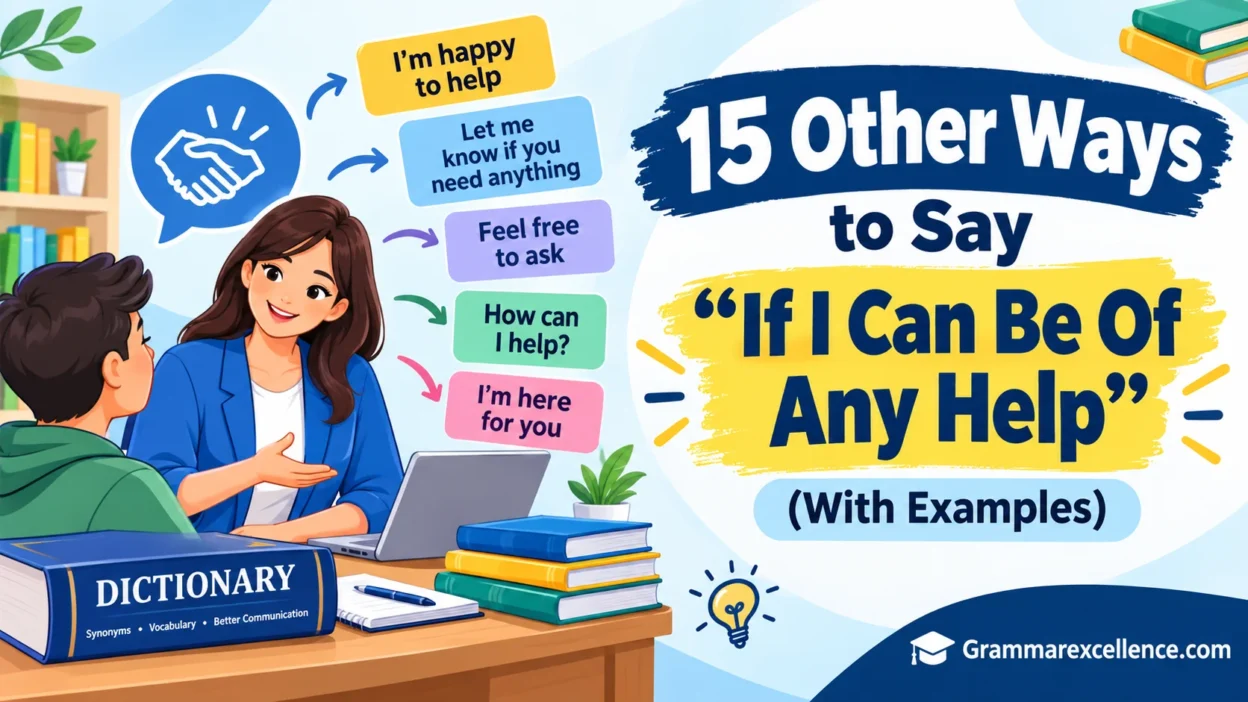
If I Can Be Of Any Help is a polite phrase that shows you are ready to offer support, whether in emails, workplace messages, customer service, or daily conversations. Using this phrase can make your communication sound helpful and professional, especially when someone may need guidance or further assistance.
However, repeating the same wording too often can make your message feel formal or predictable. Simple alternatives can make your writing warmer, clearer, and more natural while keeping the same helpful meaning. When choosing another expression, think about the person, situation, and tone. In professional communication, a gentle offer such as “Please let me know if you need anything else” can feel friendly without losing professionalism. This approach keeps the conversation open and shows genuine willingness to help.
What Does “If I Can Be Of Any Help” Mean?
“If I can be of any help” means that you are willing to assist someone if there is something you can do for them. It is a polite way of offering support, assistance, or practical help without assuming that the other person needs it. The phrase often communicates kindness and availability while allowing the other person to decide whether to accept the offer.
For example, if a colleague is dealing with a difficult task, you might say, “If I can be of any help, please let me know.” You are not promising to solve the entire problem; you are simply saying that you are available and willing to contribute. The phrase can work in professional and personal situations, although some alternatives may sound more conversational.
Common Situations Where “If I Can Be Of Any Help” Is Used
People commonly use this expression when they want to offer assistance politely and without being intrusive. It can appear in workplace conversations, emails, customer communication, personal messages, and conversations with friends or acquaintances.
In professional communication, the phrase can be useful after discussing a problem, giving information, or offering condolences. For example, an employee might write, “If I can be of any help during the transition, please let me know.” In personal communication, however, a simpler expression such as “Let me know if you need anything” may feel more natural.
Someone may also choose an alternative when they want to change the tone or level of formality. “I’d be glad to assist” sounds more formal, while “I’m happy to help” sounds warmer and more conversational.
Is It Professional or Polite to Say “If I Can Be Of Any Help”?
Yes. “If I can be of any help” is polite and generally professional, especially in emails, workplace conversations, customer communication, and other respectful interactions. The phrase is somewhat formal because “be of help” is more traditional than the everyday “help.”
It does not usually sound demanding because it leaves the decision with the other person. However, it can feel slightly formal or distant in a casual conversation with a close friend. In those situations, “How can I help?” or “Let me know if you need anything” may sound more natural. The best choice depends on the relationship, situation, and desired tone.
Advantages and Disadvantages of Saying “If I Can Be Of Any Help”
Advantages
The main advantage is that the phrase makes a polite and low-pressure offer of assistance. It shows that you are willing to help without assuming that the other person needs you. It also works well in professional settings because it is respectful and appropriately restrained.
Another benefit is its flexibility. You can use it after discussing a problem, during a difficult personal situation, or at the end of a professional email. It communicates availability, courtesy, and goodwill in a single phrase.
Disadvantages
The phrase can sound slightly formal or old-fashioned in casual conversation. With close friends, it may create more distance than necessary.
It can also feel somewhat general. If you already know what the person needs, a more direct offer such as “I can take care of that for you” may be more useful. In addition, repeatedly using the same expression in professional emails can make your communication feel predictable, so varying your wording can make messages sound more natural.
Synonyms For “If I Can Be Of Any Help”
- Let me know if I can help.
- I’m happy to help.
- Please let me know how I can help.
- How can I help?
- I’m here if you need anything.
- Don’t hesitate to reach out.
- Let me know what you need.
- I’m available to assist.
- I’d be glad to assist.
- If you need anything, just ask.
- Is there anything I can do?
- I’m happy to lend a hand.
- Please feel free to ask.
- I’m at your service.
- You can count on me if you need help.
1. Let me know if I can help.
Meaning
“Let me know if I can help” is a natural, straightforward way to offer assistance. It tells someone that you are willing to help if they need you.
Definition
A polite expression meaning “Tell me if there is something I can do to assist you.”
Detailed Explanation
This is one of the closest everyday alternatives to “If I can be of any help.” It keeps the same basic meaning but sounds more natural and conversational. It works particularly well when you want to sound helpful without being overly formal. The expression is flexible enough for both personal and professional communication.
Scenario Examples
Scenario: A colleague is preparing a presentation.
Example: “I know you have a lot to finish. Let me know if I can help.”
Scenario: A friend is moving to a new apartment.
Example: “Good luck with the move! Let me know if I can help.”
Best Use
Use it in emails, workplace conversations, texting, and everyday communication.
Tone
Tone: Friendly, polite, and practical. It sounds approachable without being too casual.
2. I’m happy to help.
Meaning
“I’m happy to help” expresses a willingness to assist and suggests that helping the person is something you are genuinely comfortable doing.
Definition
A friendly expression meaning “I am willing and pleased to provide assistance.”
Detailed Explanation
This phrase is warmer than “If I can be of any help” because it directly communicates a positive attitude toward helping. It is especially useful after someone asks for assistance or thanks you for something. Unlike the original phrase, it does not focus on whether you are capable of helping; it emphasizes your willingness.
Scenario Examples
Scenario: A coworker thanks you for explaining a process.
Example: “I’m happy to help. Let me know if anything else is unclear.”
Scenario: A friend asks you to review an important message.
Example: “Of course. I’m happy to help.”
Best Use
It works well in friendly conversations, customer service, workplace communication, and personal messages.
Tone
Tone: Warm, positive, and reassuring. The phrase makes your willingness feel genuine.
3. Please let me know how I can help.
Meaning
This expression offers assistance while inviting the other person to explain what kind of help they need.
Definition
A polite request asking someone to tell you how you can assist them.
Detailed Explanation
This alternative is more specific than “If I can be of any help.” Instead of simply offering assistance, it actively invites the person to identify a useful role for you. It is particularly effective when someone is facing a complicated situation and you genuinely want to contribute. Adding “please” makes it courteous and suitable for professional communication.
Scenario Examples
Scenario: A manager is organizing a difficult project.
Example: “I understand the deadline is tight. Please let me know how I can help.”
Scenario: A friend is dealing with a personal problem.
Example: “I’m sorry you’re going through this. Please let me know how I can help.”
Best Use
Use it in professional emails, supportive personal messages, and situations requiring a respectful tone.
Tone
Tone: Respectful, supportive, and considerate. It feels more intentional than a general offer.
4. How can I help?
Meaning
“How can I help?” directly asks the person what assistance they need.
Definition
A concise question meaning “What can I do to assist you?”
Detailed Explanation
This is more direct than “If I can be of any help.” Rather than waiting for someone to decide whether they need assistance, you actively invite them to explain their needs. It is especially natural in spoken English and customer-facing situations. Because it is direct, it can sound less formal and more immediately helpful.
Scenario Examples
Scenario: A customer looks confused in a store.
Example: “Hi there. How can I help?”
Scenario: A colleague approaches you with a problem.
Example: “You look like you’re dealing with something. How can I help?”
Best Use
It is ideal for customer service, workplace conversations, everyday interactions, and spoken English.
Tone
Tone: Direct, friendly, and attentive. It communicates that you are ready to act.
5. I’m here if you need anything.
Meaning
This phrase tells someone that you are available to support them whenever they need assistance.
Definition
A warm expression meaning “You can turn to me if you need support or assistance.”
Detailed Explanation
This alternative has a stronger sense of emotional availability than the original phrase. It is often used when someone is experiencing a difficult situation, although it can also be used casually. It does not necessarily ask the person to tell you exactly what they need right away. Instead, it reassures them that support is available.
Scenario Examples
Scenario: A friend has had a difficult day.
Example: “Take some time to rest. I’m here if you need anything.”
Scenario: A colleague is adjusting to a new role.
Example: “The first few weeks can be challenging. I’m here if you need anything.”
Best Use
Use it for personal messages, supportive conversations, friendships, and caring workplace relationships.
Tone
Tone: Warm, caring, and reassuring. It emphasizes emotional support as well as practical help.
6. Don’t hesitate to reach out.
Meaning
“Don’t hesitate to reach out” encourages someone to contact you whenever they need assistance or have questions.
Definition
A polite expression meaning “Please feel comfortable contacting me if you need help.”
Detailed Explanation
This phrase is especially common in professional communication. It focuses on making the other person feel comfortable about contacting you later rather than offering immediate assistance. Compared with “If I can be of any help,” it can sound more proactive and inviting. It is often useful at the end of an email or after providing information.
Scenario Examples
Scenario: A consultant sends information to a client.
Example: “I’ve attached the documents you requested. Don’t hesitate to reach out if you have any questions.”
Scenario: A teacher finishes speaking with a student.
Example: “If you need clarification before the exam, don’t hesitate to reach out.”
Best Use
It works particularly well in professional emails, customer communication, education, and service-based communication.
Tone
Tone: Professional, welcoming, and reassuring. It removes any feeling that contacting you would be an inconvenience.
7. Let me know what you need.
Meaning
This expression asks the person to tell you specifically what assistance or support they require.
Definition
A direct offer meaning “Tell me what you need, and I will see how I can help.”
Detailed Explanation
This wording is more specific and action-oriented than “If I can be of any help.” It works best when you are genuinely prepared to respond to the person’s particular needs. Because it is direct, it can sound confident and practical. In close relationships, it may feel especially natural.
Scenario Examples
Scenario: A friend is preparing for an event.
Example: “You have a lot to organize. Let me know what you need.”
Scenario: A team member is handling a busy assignment.
Example: “I’ve finished my part, so let me know what you need.”
Best Use
Use it in workplace communication, friendships, family conversations, and practical situations.
Tone
Tone: Direct, helpful, and confident. It suggests that you are ready to take practical action.
8. I’m available to assist.
Meaning
“I’m available to assist” means that you are available and prepared to provide help.
Definition
A formal expression meaning “I am available if you require assistance.”
Detailed Explanation
This phrase is more formal than most alternatives on this list. The word “assist” gives it a professional tone, while “available” emphasizes your readiness to provide support. It can be useful in workplace, administrative, technical, or customer-service communication. In a casual conversation, however, it may sound unnecessarily formal.
Scenario Examples
Scenario: An employee offers support during a busy period.
Example: “I’ve completed my current tasks, and I’m available to assist with anything urgent.”
Scenario: A support representative communicates with a customer.
Example: “I’m available to assist if you have any further questions.”
Best Use
Best for formal emails, workplace communication, customer support, and administrative situations.
Tone
Tone: Professional, formal, and respectful. It sounds efficient rather than emotionally expressive.
9. I’d be glad to assist.
Meaning
This phrase communicates that you would be pleased to provide assistance.
Definition
A courteous expression meaning “I would be pleased to help you.”
Detailed Explanation
“I’d be glad to assist” combines the warmth of “I’m happy to help” with the professionalism of the word “assist.” It is useful when you want to sound courteous without becoming overly casual. The expression is often more appropriate in professional settings than with close friends. It also works well when responding directly to a request.
Scenario Examples
Scenario: A customer asks for additional information.
Example: “Certainly. I’d be glad to assist you with that.”
Scenario: A colleague asks whether you can review a document.
Example: “Send it over, and I’d be glad to assist.”
Best Use
Use it in professional emails, customer communication, workplace conversations, and formal service situations.
Tone
Tone: Professional, courteous, and welcoming. It combines respect with genuine willingness.
10. If you need anything, just ask.
Meaning
This expression tells someone that they can simply ask you if they require help.
Definition
A friendly offer meaning “Ask me whenever you need assistance.”
Detailed Explanation
This phrase is more casual and relaxed than “If I can be of any help.” The word “just” makes the offer feel easy and low-pressure. It is especially natural among friends, family members, classmates, and friendly coworkers. It can also work professionally when the relationship is informal, but it may be too casual for some formal emails.
Scenario Examples
Scenario: A friend is staying at your home.
Example: “Make yourself comfortable. If you need anything, just ask.”
Scenario: A new colleague joins your team.
Example: “Welcome to the team! If you need anything, just ask.”
Best Use
Best for casual conversation, texting, friendly workplace communication, and personal messages.
Tone
Tone: Casual, friendly, and approachable. It makes asking for help feel easy.
11. Is there anything I can do?
Meaning
“Is there anything I can do?” asks whether there is a specific action you can take to help the person.
Definition
A supportive question meaning “Can I do something that would make this situation easier for you?”
Detailed Explanation
This alternative is particularly useful when someone is dealing with a difficult or emotional situation. Unlike the original phrase, it is phrased as a direct question, which can make the offer feel more personal. It may also be used in ordinary practical situations when you want to identify a specific task you can handle. Context determines whether it sounds caring or simply practical.
Scenario Examples
Scenario: A friend is going through a difficult week.
Example: “I know things have been stressful. Is there anything I can do?”
Scenario: A coworker is preparing for an event.
Example: “Everything seems busy today. Is there anything I can do?”
Best Use
It works especially well in personal conversations, supportive messages, and situations where practical assistance may be needed.
Tone
Tone: Caring, attentive, and sincere. It shows that you are interested in taking meaningful action.
12. I’m happy to lend a hand.
Meaning
“I’m happy to lend a hand” means that you are willing to help with a task or situation.
Definition
An informal expression meaning “I’m pleased to help you.”
Detailed Explanation
“Lend a hand” is a familiar English expression for helping someone, especially with a practical task. It is more informal than “If I can be of any help” and often sounds friendly and cooperative. It works particularly well when the assistance involves doing something together. It would usually be less suitable for highly formal correspondence.
Scenario Examples
Scenario: Friends are preparing for a party.
Example: “You’ve got a lot to set up. I’m happy to lend a hand.”
Scenario: A coworker is organizing files.
Example: “There are hundreds of documents here. I’m happy to lend a hand.”
Best Use
Use it in casual conversations, friendly workplace settings, group activities, and practical situations.
Tone
Tone: Friendly, informal, and cooperative. It gives the offer a relaxed and human feel.
13. Please feel free to ask.
Meaning
This expression tells someone that they are welcome to ask you for help, information, or clarification.
Definition
A polite expression meaning “You are welcome to ask me if you need assistance or information.”
Detailed Explanation
“Please feel free to ask” is useful when you want to make communication feel open and comfortable. It does not necessarily promise that you can solve every problem, but it invites the person to approach you. This makes it particularly useful after giving instructions, information, or advice. It can sound professional while remaining approachable.
Scenario Examples
Scenario: A teacher explains an assignment.
Example: “If anything about the instructions is unclear, please feel free to ask.”
Scenario: A professional sends a client a proposal.
Example: “Please feel free to ask if you would like me to explain any part of the proposal.”
Best Use
Best for emails, education, professional communication, customer service, and polite written communication.
Tone
Tone: Polite, open, and professional. It encourages questions without putting pressure on the other person.
14. I’m at your service.
Meaning
“I’m at your service” means that you are ready and willing to assist someone.
Definition
A formal expression meaning “I am available to help or serve you.”
Detailed Explanation
This is a significantly more formal expression than “If I can be of any help.” It can sound courteous and polished, but depending on the situation, it may also sound old-fashioned, theatrical, or overly formal. It is therefore best used selectively. In modern everyday conversation, simpler alternatives usually sound more natural.
Scenario Examples
Scenario: A hotel employee speaks to a guest.
Example: “If there is anything else you require, I’m at your service.”
Scenario: A character in a formal or historical-style story speaks to a guest.
Example: “Whatever you require, I’m at your service.”
Best Use
Use it in formal service situations, ceremonial language, hospitality, or creative writing where a polished tone is appropriate.
Tone
Tone: Formal, courteous, and sometimes traditional. Its style makes it less suitable for ordinary casual conversation.
15. You can count on me if you need help.
Meaning
This expression tells someone that they can rely on you for support when necessary.
Definition
A reassuring statement meaning “You can depend on me if you need assistance.”
Detailed Explanation
This alternative goes beyond simply offering help; it communicates reliability and commitment. It is useful when you want the other person to feel confident that you will be there for them. Because it suggests dependable support, it can feel warmer and stronger than the original phrase. It is particularly appropriate when there is an established relationship or a meaningful situation.
Scenario Examples
Scenario: A friend is preparing for an important event.
Example: “Whatever happens this weekend, you can count on me if you need help.”
Scenario: A colleague is taking on a challenging project.
Example: “It’s a big assignment, but you can count on me if you need help.”
Best Use
Best for personal relationships, supportive workplace communication, teamwork, and situations requiring reassurance.
Tone
Tone: Warm, dependable, and reassuring. It emphasizes trust and reliability, not just availability.
FAQs
Q1. What is another way to say “If I can be of any help”?
A natural alternative is “Let me know if I can help.” Other useful options include “I’m happy to help,” “Please let me know how I can help,” and “How can I help?” The best choice depends on whether you want to sound casual, warm, direct, or professional.
Q2. What does “If I can be of any help” mean?
“If I can be of any help” means that you are willing to assist someone if there is something you can do. It is a polite, relatively formal way of offering support without assuming that the person needs your assistance.
Q3. Is “If I can be of any help” professional?
Yes. It is generally considered polite and professional, particularly in workplace emails and respectful conversations. However, it can sound more formal than everyday alternatives such as “I’m happy to help” or “Let me know if you need anything.”
Q4. What is a more polite way to say “If I can be of any help”?
The original phrase is already polite, but “Please let me know how I can help” is a warm and respectful alternative. “I’d be glad to assist” is another option when a more professional tone is appropriate.
Q5. Which alternative works best in formal communication?
For formal communication, “Please let me know how I can help,” “I’m available to assist,” and “I’d be glad to assist” are strong choices. The right expression depends on whether you want the message to feel formal, warm, or service-oriented.
Conclusion
If I Can Be Of Any Help remains a useful way to show support, willingness, and approachability. Still, using natural alternatives can make your message feel more personal, warm, and clear. Choosing words based on the context, audience, and desired tone helps your offer sound sincere rather than repetitive or overly formal. Whether you are writing an email, helping a client, or speaking with a colleague, thoughtful wording can create a more comfortable and helpful conversation.