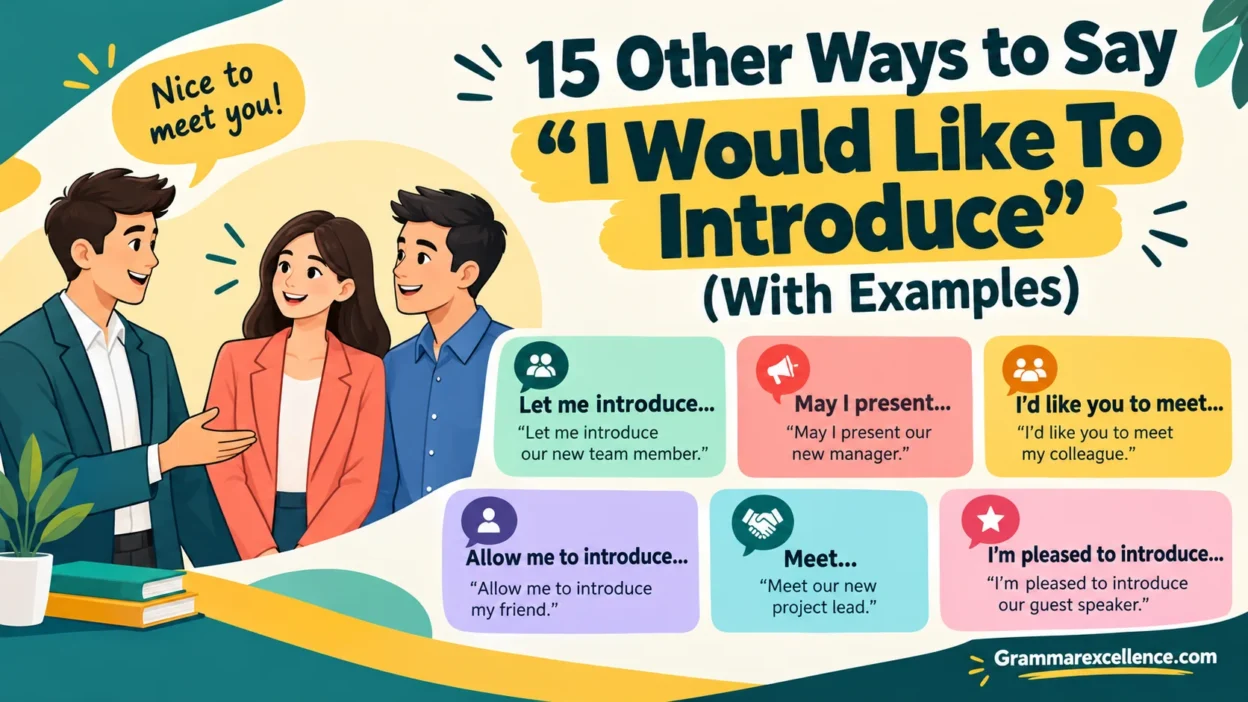
I Would Like To Introduce myself clearly and politely when meeting people, especially in a formal setting, business meeting, or professional context. A good introduction in English is an essential skill for communication with people from different countries and cultures.
When making new friends, attending events, traveling, or working, you may need to say who you are, what you do, where you come from, and share your interests. I would like to introduce you is a correct, polite, and commonly used sentence in written English. It can introduce a new colleague, friend, or family member while showing respect, politeness, and cordiality.
In an email, the phrase can provide a simple way to present yourself with a professional greeting, sender name, purpose, and a strong subject line. As a sender, use your name when you introduce your purpose, especially the first time or when someone else has introduced you. Choosing clear, formal, friendly, confident, or conversational wording helps the introduction feel natural, smooth, personal, respectful, courteous, and suitable for professional business correspondence.
What Does “I Would Like To Introduce” Mean?
“I would like to introduce” is a polite expression used when you are about to present a person, idea, topic, or organization to someone. When introducing a person, it usually signals that you want others to meet or become familiar with them. For example, “I would like to introduce my colleague, Sarah” tells listeners that Sarah is about to be presented to them.
The phrase is generally polite, respectful, and moderately formal. It is especially common in meetings, presentations, speeches, emails, ceremonies, and professional settings. Depending on the context, alternatives can make the introduction sound more relaxed, warm, direct, or enthusiastic.
Common Situations Where “I Would Like To Introduce” Is Used
You can use “I would like to introduce” when presenting a new colleague, guest, speaker, friend, business partner, idea, or topic. It works naturally in workplace communication, presentations, formal events, classroom settings, and written introductions.
For casual conversations, however, the phrase may sound slightly formal. Saying “Meet…”, “Let me introduce…”, or “I’d like you to meet…” can feel more natural when talking with friends or acquaintances. The best alternative depends on your relationship with the audience and the level of formality you need.
Is It Professional or Polite to Say “I Would Like To Introduce”?
Yes. “I would like to introduce” is both professional and polite. It has a respectful tone without sounding excessively formal, which makes it useful in business meetings, presentations, speeches, and official communication. The full form “I would like to” is slightly more formal than the contraction “I’d like to.”
It is also appropriate when you want to give an introduction some importance. In a casual setting, though, it can feel more formal than necessary. A shorter expression such as “Meet…” may sound more relaxed.
Advantages and Disadvantages of Saying “I Would Like To Introduce”
Advantages
The main advantage is its polite and flexible tone. It clearly signals that an introduction is about to happen and works with people, topics, ideas, and organizations. It is also easy for English learners to understand and is suitable for many professional and formal situations.
Disadvantages
The phrase can sometimes sound formal or rehearsed in an informal conversation. It is also somewhat longer than simpler expressions such as “Meet…” or “Let me introduce…”. If you use it repeatedly during a presentation or conversation, the wording may feel predictable.
Synonyms for “I Would Like To Introduce”
- Let Me Introduce
- I’d Like You to Meet
- Meet
- Allow Me to Introduce
- I’m Pleased to Introduce
- I’m Happy to Introduce
- Please Meet
- May I Introduce
- I’d Like to Present
- Let Me Present
- I’d Like to Welcome
- Please Welcome
- I Want You to Meet
- I’d Like to Bring Your Attention to
- Let Me Tell You About
1. Let Me Introduce
Meaning
“Let me introduce” means that you are asking or indicating that you will introduce someone or something to the audience.
Definition
A polite and direct expression used before presenting a person, idea, or subject.
Detailed Explanation
“Let me introduce” is a little more direct and conversational than “I would like to introduce.” It works especially well when you are speaking to a group and want to move naturally into an introduction. It can introduce both people and topics, although the exact wording should fit the context.
Scenario Examples
Scenario: You are meeting a friend and a colleague for the first time.
Example: “Let me introduce you to my colleague, Daniel.”
Scenario: You are beginning a presentation.
Example: “Let me introduce the main idea behind our new project.”
Best Use
Best for meetings, presentations, everyday conversations, and professional introductions.
Tone: Polite, direct, conversational. It feels less formal while remaining respectful.
2. I’d Like You to Meet
Meaning
“I’d like you to meet” means that you want someone to meet and become acquainted with another person.
Definition
A friendly expression used to introduce one person to another.
Detailed Explanation
This expression focuses specifically on meeting people, rather than introducing ideas or topics. It sounds warm and natural in both professional and personal situations. Compared with “I would like to introduce,” it can feel more personal because it directly addresses the people involved.
Scenario Examples
Scenario: You are introducing your new coworker.
Example: “I’d like you to meet our new marketing manager, Ayesha.”
Scenario: You are introducing your friend to your family.
Example: “I’d like you to meet my friend from university.”
Best Use
Best for personal introductions, workplace meetings, networking, and social events.
Tone: Warm, friendly, polite. It creates a welcoming feeling.
3. Meet
Meaning
“Meet” is a short way to introduce someone to another person or group.
Definition
A brief and informal introduction that invites people to become acquainted.
Detailed Explanation
“Meet” is much shorter and more casual than “I would like to introduce.” It is especially natural in spoken English and informal writing. Although simple, it can sound confident and friendly when used correctly.
Scenario Examples
Scenario: You introduce your friend to another friend.
Example: “Meet Ali, my old college roommate.”
Scenario: You post a picture introducing a new team member.
Example: “Meet our newest team member, Sara.”
Best Use
Best for casual conversations, social media, friendly messages, and informal introductions.
Tone: Casual, friendly, direct. Its short form makes the introduction feel relaxed.
4. Allow Me to Introduce
Meaning
“Allow me to introduce” is a formal way of saying that you would like to introduce someone or something.
Definition
A formal and courteous expression used when presenting a person, speaker, subject, or idea.
Detailed Explanation
This expression is more formal than “I would like to introduce.” It can sound polished and respectful, especially at ceremonies, formal events, speeches, and official occasions. Because of its formal character, it may sound overly elaborate in an ordinary conversation.
Scenario Examples
Scenario: You are introducing a guest speaker at an event.
Example: “Allow me to introduce our guest speaker, Dr. Khan.”
Scenario: You are addressing an official gathering.
Example: “Allow me to introduce the members of our committee.”
Best Use
Best for formal speeches, ceremonies, official events, and professional presentations.
Tone: Formal, respectful, polished. The wording gives the introduction a sense of occasion.
5. I’m Pleased to Introduce
Meaning
“I’m pleased to introduce” communicates that you are happy or honored to present someone or something.
Definition
A formal expression showing positive feelings while making an introduction.
Detailed Explanation
This phrase adds a sense of pleasure or appreciation to the introduction. It is useful when the person or subject being introduced has some importance to the audience. Compared with the original phrase, it sounds warmer and more ceremonious.
Scenario Examples
Scenario: You are introducing an award recipient.
Example: “I’m pleased to introduce this year’s recipient of the leadership award.”
Scenario: A company announces a new executive.
Example: “I’m pleased to introduce our new director of operations.”
Best Use
Best for formal announcements, business events, ceremonies, and presentations.
Tone: Warm, formal, appreciative. “Pleased” adds a positive emotional note.
6. I’m Happy to Introduce
Meaning
“I’m happy to introduce” means that you are glad to present someone or something to others.
Definition
A friendly introduction that expresses genuine positive feeling.
Detailed Explanation
This alternative is less formal than “I’m pleased to introduce” and often feels more natural in friendly professional settings. It communicates both the introduction and your positive attitude toward the person or subject. It can work particularly well when introducing a colleague, friend, or new team member.
Scenario Examples
Scenario: You introduce a new employee to your team.
Example: “I’m happy to introduce our newest team member, Omar.”
Scenario: You announce a new project.
Example: “I’m happy to introduce our new community program.”
Best Use
Best for team communication, friendly presentations, announcements, and personal introductions.
Tone: Warm, positive, approachable. It sounds enthusiastic without being overly formal.
7. Please Meet
Meaning
“Please meet” politely asks or invites people to meet the person being introduced.
Definition
A concise expression used to present someone politely.
Detailed Explanation
“Please meet” is short but still courteous. It is particularly useful when introducing someone to a group or audience. Unlike “I would like to introduce,” it places greater emphasis on the audience meeting the person.
Scenario Examples
Scenario: You introduce a speaker at a small event.
Example: “Please meet our keynote speaker, Mr. Ahmed.”
Scenario: You introduce a new employee by email.
Example: “Please meet Lina, who has joined our customer support team.”
Best Use
Best for professional introductions, emails, networking, and group settings.
Tone: Polite, professional, concise. It keeps the introduction simple and respectful.
8. May I Introduce
Meaning
“May I introduce” is a polite question used when asking permission to introduce someone.
Definition
A courteous and formal introduction that presents the introduction as a respectful invitation.
Detailed Explanation
This expression is more formal than everyday alternatives. It can be useful when etiquette and courtesy are important, particularly at formal gatherings or official events. In casual conversation, it may sound somewhat old-fashioned or ceremonious.
Scenario Examples
Scenario: You are at a formal reception.
Example: “May I introduce Mr. Hassan, our visiting professor?”
Scenario: You are presenting two senior professionals.
Example: “May I introduce our new department head?”
Best Use
Best for formal events, ceremonies, official meetings, and respectful introductions.
Tone: Formal, courteous, respectful. The question form adds a traditional sense of politeness.
9. I’d Like to Present
Meaning
“I’d like to present” means that you want to formally show or introduce something to an audience.
Definition
An expression used to present a person, idea, project, or information to others.
Detailed Explanation
This phrase is not always a direct replacement for introducing a person. It is especially appropriate when you are presenting a project, proposal, argument, report, or speaker. It emphasizes the act of presenting rather than simply making someone acquainted with another person.
Scenario Examples
Scenario: You are giving a business presentation.
Example: “I’d like to present our proposal for the next quarter.”
Scenario: You are presenting a new idea to your team.
Example: “I’d like to present a possible solution to this problem.”
Best Use
Best for business presentations, academic work, meetings, and formal speaking.
Tone: Professional, confident, structured. It signals that the audience should pay attention to what follows.
10. Let Me Present
Meaning
“Let me present” means that you are going to formally show or introduce something to an audience.
Definition
A direct expression used before presenting information, an idea, project, or person.
Detailed Explanation
“Let me present” is more active and direct than “I would like to introduce.” It works particularly well when you are taking control of a presentation or moving to a new section. It is generally less suitable for simply introducing two people socially.
Scenario Examples
Scenario: You are presenting a business proposal.
Example: “Let me present our plan for improving customer service.”
Scenario: You are introducing a project to your class.
Example: “Let me present the findings from our research.”
Best Use
Best for presentations, meetings, classrooms, and professional discussions.
Tone: Confident, direct, professional. It creates a clear transition into the presentation.
11. I’d Like to Welcome
Meaning
“I’d like to welcome” means that you want to greet someone or acknowledge their arrival.
Definition
A warm expression used to greet or receive a person or group.
Detailed Explanation
This is related to introducing someone but is not an exact synonym. It focuses on making people feel received and appreciated rather than simply telling the audience who they are. It is particularly effective when welcoming guests, new employees, visitors, or participants.
Scenario Examples
Scenario: A manager welcomes a new employee.
Example: “I’d like to welcome Maria to our team.”
Scenario: A host opens an event.
Example: “I’d like to welcome everyone to tonight’s ceremony.”
Best Use
Best for events, workplaces, speeches, announcements, and group gatherings.
Tone: Warm, welcoming, professional. The wording emphasizes hospitality and inclusion.
12. Please Welcome
Meaning
“Please welcome” asks an audience to greet or receive someone positively.
Definition
A polite phrase used to introduce and welcome a person or group.
Detailed Explanation
This expression is especially common when introducing someone who is about to speak, perform, or receive attention from an audience. It goes beyond identification by encouraging the audience to respond with a welcome. It therefore has a more public and ceremonial quality than the original phrase.
Scenario Examples
Scenario: You introduce a speaker at a conference.
Example: “Please welcome our guest speaker, Ms. Ahmed.”
Scenario: A host introduces a performer.
Example: “Please welcome the school’s senior choir.”
Best Use
Best for speeches, conferences, ceremonies, performances, and public events.
Tone: Warm, formal, inviting. It encourages audience participation.
13. I Want You to Meet
Meaning
“I want you to meet” means that you strongly intend or would like someone to meet another person.
Definition
A direct expression used for personal introductions.
Detailed Explanation
This phrase is more direct and personal than “I would like to introduce.” It can communicate enthusiasm or a strong reason for bringing people together. However, in formal situations, “I’d like you to meet” is usually softer and more polished.
Scenario Examples
Scenario: You introduce a close friend to your partner.
Example: “I want you to meet my best friend, Hassan.”
Scenario: You introduce a talented colleague.
Example: “I want you to meet Sarah; she designed the entire campaign.”
Best Use
Best for personal conversations, friendly introductions, and informal workplace situations.
Tone: Direct, personal, enthusiastic. It can show that the meeting is meaningful to you.
14. I’d Like to Bring Your Attention to
Meaning
“I’d like to bring your attention to” means that you want people to notice or consider something important.
Definition
A formal expression used to draw attention to a particular point, issue, or piece of information.
Detailed Explanation
This is not a direct synonym for introducing a person. Instead, it is useful when introducing an issue, fact, document, concern, or important idea. It sounds more formal and purposeful than “I would like to introduce,” making it common in professional and academic communication.
Scenario Examples
Scenario: You are discussing a report.
Example: “I’d like to bring your attention to the figures on page five.”
Scenario: You are raising an issue during a meeting.
Example: “I’d like to bring your attention to a potential scheduling problem.”
Best Use
Best for formal emails, reports, meetings, presentations, and academic communication.
Tone: Formal, professional, focused. It signals that the following information deserves attention.
15. Let Me Tell You About
Meaning
“Let me tell you about” means that you are going to give someone information about a person, place, idea, experience, or subject.
Definition
A conversational expression used to introduce a topic through explanation or description.
Detailed Explanation
This phrase is broader and more conversational than “I would like to introduce.” It does not normally mean formally presenting a person to an audience; instead, it introduces a subject for discussion. It is useful when you want to create interest before explaining something in more detail.
Scenario Examples
Scenario: You are telling a friend about a new colleague.
Example: “Let me tell you about our new team leader.”
Scenario: You are beginning a personal story.
Example: “Let me tell you about the trip that changed my perspective.”
Best Use
Best for casual conversation, storytelling, presentations, articles, and personal communication.
Tone: Conversational, engaging, friendly. It invites the listener to become interested in the subject.
FAQs
Q1. What is another way to say “I would like to introduce”?
Natural alternatives include “Let me introduce,” “I’d like you to meet,” “Meet,” and “Allow me to introduce.” The best choice depends on whether you need a casual, professional, or formal tone.
Q2. What does “I would like to introduce” mean?
It means that you are politely preparing to present or identify someone or something to another person or group. It is commonly used when introducing people, speakers, ideas, or topics.
Q3. Is “I would like to introduce” professional?
Yes. “I would like to introduce” is professional and polite, particularly in meetings, presentations, speeches, emails, and formal events. It can sound slightly formal in relaxed conversations.
Q4. What is a more polite way to say “I would like to introduce”?
For a formal setting, “Allow me to introduce” or “May I introduce” can sound especially courteous. For a warm professional introduction, “I’d like you to meet” is often natural.
Q5. Which alternative works best in formal communication?
“Allow me to introduce” is strongly formal, while “I’m pleased to introduce” adds warmth and formality. If you are presenting an idea rather than a person, “I’d like to present” may be more precise.
Conclusion
“I Would Like To Introduce” is a simple and polite way to begin an introduction in English. It helps you present yourself or another person with clarity, respect, and confidence. In professional communication, especially an email, the phrase can create a positive first impression when combined with a clear subject line, greeting, sender name, and purpose. It also works well in a business meeting, formal gathering, or everyday conversation. Choosing the right tone makes your message feel more natural, friendly, formal, and personal. A thoughtful introduction can support stronger communication, relationships, and professional connections.