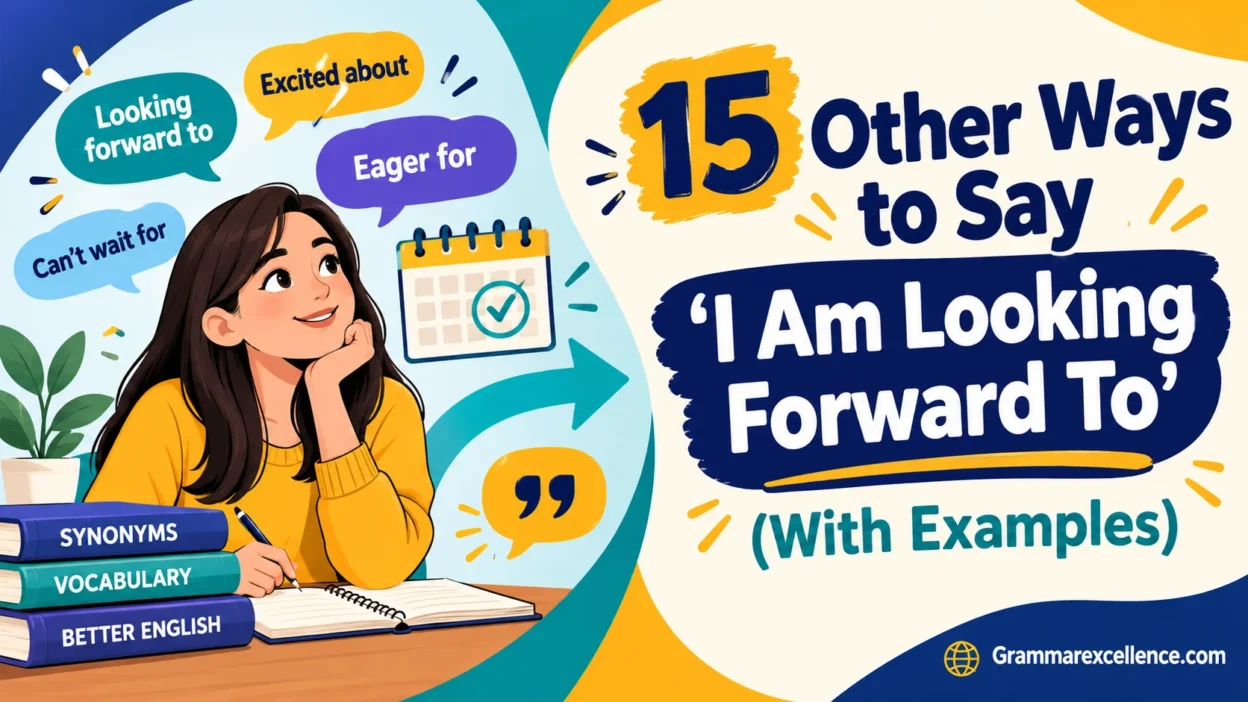
I Am Looking Forward To is a warm and professional phrase that shows you are expecting, welcoming, or feeling positive about a future response, meeting, or opportunity. In emails, it can make your closing sound polite, confident, and respectful without being too formal. It works especially well when you want to encourage communication while keeping a friendly and professional tone.
When I use I Am Looking Forward To in professional communication, I find that the words that follow it matter. For example, I am looking forward to hearing from you is suitable when expecting a reply, while I am looking forward to our meeting works well when confirming future communication. The phrase can also support client communication, workplace communication, and professional relationships by showing genuine interest in what comes next.
I Am Looking Forward To can therefore be adapted to many professional situations, including meetings, collaboration, tasks, and future opportunities. Choosing a specific phrase after it makes the message clearer and more natural, while maintaining a friendly, professional, and courteous impression.
What Does “I Am Looking Forward To” Mean?
I am looking forward to means that you feel pleased, excited, or hopeful about something that will happen in the future. It can be used before a noun, noun phrase, or an -ing verb, such as “I am looking forward to the meeting” or “I am looking forward to hearing from you.” The phrase usually communicates positive anticipation rather than simply stating that something is expected. It is common in everyday conversations, personal messages, emails, and professional communication.
The phrase can also show polite interest. For example, “I am looking forward to working with you” expresses a positive attitude toward future cooperation. Its exact feeling depends on context: it can sound professional and courteous in a business email or warm and personal when talking about meeting a friend.
Common Situations Where “I Am Looking Forward To” Is Used
People commonly use I am looking forward to when talking about future events, plans, meetings, visits, opportunities, or communication. You might use it in a message to a friend before a trip, in an email before a business meeting, or when telling someone that you are excited about seeing them.
It is particularly common in professional emails. Expressions such as “I am looking forward to hearing from you” and “I am looking forward to meeting you” communicate interest without sounding overly emotional. In personal communication, however, you may prefer a more enthusiastic phrase such as I can’t wait or I’m really excited about when you want to show stronger emotion.
Is It Professional or Polite to Say “I Am Looking Forward To”?
Yes. I am looking forward to being generally considered polite, professional, and appropriate in many formal situations. It is especially useful in emails because it communicates positive anticipation without sounding too casual. For example, “I am looking forward to discussing the proposal with you” works naturally in workplace communication.
The phrase can also be friendly and personal. Its tone depends largely on the surrounding words. A formal sentence such as “I am looking forward to our meeting” sounds more professional, while “I am looking forward to seeing you this weekend” can sound warm and personal. If you want stronger excitement, a phrase like I can’t wait may be more suitable, although it is usually more casual.
Advantages and Disadvantages of Saying “I Am Looking Forward To”
Advantages
The main advantage is its versatility. The phrase works in professional emails, personal messages, conversations, invitations, and other forms of communication. It expresses positive anticipation clearly and politely. It is also familiar to English speakers, so the meaning is immediately understood. In professional writing, it can help close a message on a positive and courteous note.
Disadvantages
The phrase can sometimes feel repetitive or conventional, particularly when used frequently in emails. It may also sound less emotionally strong than expressions such as “I can’t wait” or “I’m really excited about it.” In some very formal contexts, I anticipate or I await may fit better, while casual conversations may benefit from more relaxed wording.
Synonyms For “I Am Looking Forward To”
- I’m excited about
- I can’t wait for
- I’m eager to
- I’m keen to
- I’m anticipating
- I’m looking forward to it
- I’m really looking forward to
- I’m enthusiastic about
- I’m delighted about
- I’m counting down to
- I’m thrilled about
- I’m excited to
- I’m happy to
- I’m anticipating with excitement
- I await with anticipation
1. I’m excited about
Meaning
I’m excited about expresses strong positive feelings toward something that is going to happen. It shows more obvious enthusiasm than the neutral phrase “I am looking forward to.”
Definition
I’m excited about means that you feel very happy, interested, or enthusiastic about a future event, experience, or opportunity.
Detailed Explanation
This expression is especially useful when you want your message to sound genuine and enthusiastic. It can be used with a noun or noun phrase, such as “I’m excited about the trip.” Compared with “I am looking forward to,” it often communicates stronger emotion. It works well in personal conversations, workplace messages, announcements, and informal professional communication.
Scenario Examples
Scenario: You are telling a friend about an upcoming vacation.
Example: “I’m really excited about our trip next month.”
Scenario: Your company has announced a new project.
Example: “I’m excited about the opportunity to work on this project.”
Scenario: You are preparing for a family celebration.
Example: “We’re all excited about the wedding.”
Best Use
Best for personal messages, workplace communication, conversations, announcements, and friendly emails where you want to show enthusiasm.
Tone
Tone: Enthusiastic, warm, positive
It sounds more emotionally expressive than the original phrase.
2. I can’t wait for
Meaning
I can’t wait for means that you are very eager for something to happen. It communicates strong excitement and impatience in a positive sense.
Definition
I can’t wait for means that you are extremely excited about a future event and wish it would happen soon.
Detailed Explanation
This is a highly natural expression in casual English. It is stronger and more energetic than “I am looking forward to.” Although it literally mentions an inability to wait, it normally does not mean actual impatience or frustration. Because it is informal, it may be less suitable for a highly formal business letter.
Scenario Examples
Scenario: Your friend is visiting after a long time.
Example: “I can’t wait for you to get here!”
Scenario: You have tickets for a concert.
Example: “I can’t wait for the concert on Saturday.”
Scenario: You are speaking to your partner about a planned holiday.
Example: “I can’t wait for us to spend some time together.”
Best Use
Best for texting, casual conversation, social media, friends, family, and romantic communication.
Tone
Tone: Excited, casual, energetic
Its lively tone makes it ideal when you want your excitement to be obvious.
3. I’m eager to
Meaning
I’m eager to communicates a strong desire to do something in the future. It often sounds more purposeful and polished than “I can’t wait.”
Definition
I’m eager to means that you are very interested in or enthusiastic about doing something.
Detailed Explanation
This phrase focuses on readiness and willingness as well as anticipation. It is commonly followed by a verb, such as “I’m eager to learn more.” Compared with “I am looking forward to,” it can sound slightly more direct and purposeful. It is suitable for both professional and personal contexts when you want to communicate sincere interest.
Scenario Examples
Scenario: You have applied for a position and want to express interest.
Example: “I’m eager to discuss how my experience could support the team.”
Scenario: You are starting a new course.
Example: “I’m eager to learn more about digital marketing.”
Scenario: You are joining a group project.
Example: “I’m eager to work with everyone on this assignment.”
Best Use
Best for professional emails, interviews, academic communication, applications, and purposeful conversations.
Tone
Tone: Positive, confident, purposeful
It conveys enthusiasm while maintaining a relatively polished style.
4. I’m keen to
Meaning
I’m keen to means that you are very interested or willing to do something. It is particularly common in British English.
Definition
I’m keen to means that you have a strong interest in doing something or taking part in something.
Detailed Explanation
This expression is natural when discussing plans, opportunities, activities, or cooperation. It often sounds less emotionally intense than “I can’t wait” but more interested than a neutral statement. It can work well in professional communication, especially in varieties of English where keen is commonly used. The expression is normally followed by a verb.
Scenario Examples
Scenario: A colleague suggests collaborating.
Example: “I’m keen to explore the idea with you.”
Scenario: You are discussing a new hobby.
Example: “I’m keen to try photography this year.”
Scenario: A manager offers you additional responsibility.
Example: “I’m keen to take on the new project.”
Best Use
Best for professional communication, British English, workplace conversations, and everyday discussions.
Tone
Tone: Interested, positive, confident
It communicates enthusiasm without sounding overly emotional.
5. I’m anticipating
Meaning
I’m anticipating means that you are expecting and thinking about something that is likely to happen. Depending on context, it can communicate positive anticipation.
Definition
I’m anticipating means that you are expecting a future event and thinking about it in advance.
Detailed Explanation
This expression is somewhat more formal and deliberate than “I am looking forward to.” It is useful when the focus is on expectation rather than pure excitement. For example, “I’m anticipating a productive discussion” sounds measured and professional. Because anticipation can sometimes be neutral or even cautious, context determines whether the phrase sounds enthusiastic.
Scenario Examples
Scenario: You are preparing for an important meeting.
Example: “I’m anticipating a productive conversation tomorrow.”
Scenario: A business is preparing for increased demand.
Example: “We’re anticipating a busy holiday season.”
Scenario: You are waiting for an important event.
Example: “I’m anticipating the results with great interest.”
Best Use
Best for professional writing, formal discussions, planning, and situations involving expectation.
Tone
Tone: Formal, thoughtful, expectant
It sounds more measured than highly emotional alternatives.
6. I’m looking forward to it
Meaning
I’m looking forward to it expressing positive anticipation when the specific event has already been mentioned or is understood from context.
Definition
I’m looking forward to it means that you are happy or excited about something that will happen in the future.
Detailed Explanation
This is essentially a more concise version of the original expression. Instead of repeating the event, it refers back to something already discussed. It is especially natural in conversations and messages where repeating the full noun or activity would sound unnecessary. The expression can be casual, friendly, or professional depending on the surrounding conversation.
Scenario Examples
Scenario: A friend has invited you to dinner.
Example: “Thanks for the invitation. I’m looking forward to it.”
Scenario: A colleague has arranged a meeting.
Example: “Tuesday works perfectly. I’m looking forward to it.”
Scenario: Someone has planned a weekend activity.
Example: “That sounds like fun. I’m definitely looking forward to it.”
Best Use
Best for emails, text messages, conversations, invitations, and follow-up replies.
Tone
Tone: Warm, polite, flexible
It is a convenient expression when the subject has already been established.
7. I’m really looking forward to
Meaning
I’m really looking forward to adds extra emphasis to the original expression. The word really makes the anticipation sound stronger and more personal.
Definition
I’m really looking forward to means that you are especially happy or excited about something that will happen.
Detailed Explanation
This phrase keeps the familiar politeness of “I am looking forward to” while adding emotional warmth. It is useful when the standard expression feels slightly too neutral for what you actually feel. It can be used before a noun or an -ing verb, such as “I’m really looking forward to meeting you.” It remains natural in professional communication when the context supports a warm tone.
Scenario Examples
Scenario: You are meeting an old friend.
Example: “I’m really looking forward to catching up with you.”
Scenario: You are attending a professional event.
Example: “I’m really looking forward to meeting the team.”
Scenario: You are preparing for a family visit.
Example: “I’m really looking forward to spending the weekend together.”
Best Use
Best for personal messages, friendly emails, meetings, visits, and warm professional communication.
Tone
Tone: Warm, enthusiastic, sincere
The added emphasis makes the expression feel more personal.
8. I’m enthusiastic about
Meaning
I’m enthusiastic about communicating strong interest, energy, and positive feeling toward an idea, activity, opportunity, or project.
Definition
I’m enthusiastic about means that you have a strong and positive interest in something.
Detailed Explanation
This phrase focuses more on enthusiasm and attitude than simply waiting for a future event. It is particularly useful when discussing projects, ideas, subjects, or opportunities. It can sound polished in professional writing while still expressing genuine excitement. Unlike “I am looking forward to,” it does not always require a future event.
Scenario Examples
Scenario: Your manager introduces a new project.
Example: “I’m enthusiastic about the direction of this project.”
Scenario: You are discussing a new business idea.
Example: “She’s enthusiastic about the possibility of expanding the service.”
Scenario: You are talking about a course you have chosen.
Example: “I’m enthusiastic about studying this subject.”
Best Use
Best for professional emails, interviews, academic writing, workplace discussions, and conversations about ideas or opportunities.
Tone
Tone: Positive, confident, professional
It communicates strong interest without sounding overly casual.
9. I’m delighted about
Meaning
I’m delighted about express great happiness or pleasure concerning something. It is warmer and more celebratory than the standard phrase.
Definition
I’m delighted about means that you feel very happy or pleased about something.
Detailed Explanation
This expression is appropriate when the situation genuinely gives you a reason to feel very pleased. It can work in professional and personal communication, although it may sound more formal or expressive than everyday alternatives. In many contexts, “I’m delighted to” is more idiomatic when followed by an action, such as “I’m delighted to meet you.” Use “about” when focusing on a situation, result, or event.
Scenario Examples
Scenario: A colleague has received a promotion.
Example: “I’m delighted about your promotion.”
Scenario: Your team has reached an important milestone.
Example: “We’re delighted about the progress we’ve made.”
Scenario: A family member shares happy news.
Example: “I’m delighted about the wonderful news.”
Best Use
Best for congratulations, positive announcements, professional messages, formal occasions, and personal communication.
Tone
Tone: Warm, pleased, celebratory
It suggests genuine happiness rather than simple anticipation.
10. I’m counting down to
Meaning
I’m counting down to means that you are very excited about an approaching event and are mentally marking the time until it arrives.
Definition
I’m counting down to means that you are eagerly waiting for a particular future event.
Detailed Explanation
This expression is more vivid and informal than “I am looking forward to.” It suggests that the event is close enough to anticipate actively. It is especially natural for birthdays, holidays, weddings, vacations, concerts, launches, and other memorable occasions. Because of its energetic quality, it is less suitable for very formal business writing.
Scenario Examples
Scenario: You have a holiday coming soon.
Example: “I’m counting down to our beach vacation.”
Scenario: Your birthday is next week.
Example: “I’m counting down to my birthday!”
Scenario: A major event is approaching.
Example: “We’re counting down to the big day.”
Best Use
Best for social media, casual conversation, texting, celebrations, holidays, and personal messages.
Tone
Tone: Excited, playful, energetic
The phrase creates a stronger sense of anticipation and immediacy.
11. I’m thrilled about
Meaning
I’m thrilled about expresses very strong excitement and happiness about something.
Definition
I’m thrilled about means that you are extremely pleased and excited about a situation, opportunity, or event.
Detailed Explanation
This is a stronger emotional alternative to “I am looking forward to.” It is appropriate when ordinary enthusiasm does not fully express your feelings. The phrase works particularly well when something genuinely important or exciting has happened or is about to happen. Because thrilled is emotionally strong, it may sound excessive for routine professional matters.
Scenario Examples
Scenario: You have received an exciting opportunity.
Example: “I’m thrilled about the chance to join the team.”
Scenario: A friend tells you about their upcoming wedding.
Example: “I’m thrilled about the wedding and can’t wait to celebrate with you.”
Scenario: Your company is launching an important project.
Example: “We’re thrilled about the new product launch.”
Best Use
Best for major opportunities, celebrations, personal messages, announcements, and enthusiastic professional communication.
Tone
Tone: Very enthusiastic, joyful, expressive
It communicates stronger emotion than most standard alternatives.
12. I’m excited to
Meaning
I’m excited to express my enthusiasm about doing a particular action in the future.
Definition
I’m excited to means that you are very happy or enthusiastic about doing something.
Detailed Explanation
This phrase is especially useful when the next word is a verb, such as “I’m excited to meet you” or “I’m excited to begin.” It is slightly different grammatically from “I’m excited about,” which is generally followed by a noun or noun phrase. The expression is natural in both professional and personal settings. It often sounds more energetic than the traditional “I am looking forward to.”
Scenario Examples
Scenario: You are starting a new job.
Example: “I’m excited to join the team next Monday.”
Scenario: You are meeting someone for the first time.
Example: “I’m excited to finally meet you in person.”
Scenario: You are launching a new project.
Example: “I’m excited to share the project with everyone.”
Best Use
Best for emails, announcements, workplace communication, introductions, personal messages, and spoken English.
Tone
Tone: Enthusiastic, friendly, positive
It is direct and energetic while remaining broadly appropriate.
13. I’m happy to
Meaning
I’m happy to express a positive willingness to do something. It can sometimes replace “I am looking forward to,” but the two phrases are not identical.
Definition
I’m happy to means that you are pleased or willing to do something.
Detailed Explanation
This expression is often about willingness rather than anticipation. For example, “I’m happy to help” means you are willing and pleased to help, not necessarily that you are excited about the future. It is therefore useful as an alternative only when the intended meaning includes readiness or positive willingness. In professional communication, it can sound polite and cooperative.
Scenario Examples
Scenario: A colleague asks you to help with a task.
Example: “I’m happy to help with the presentation.”
Scenario: A customer needs additional information.
Example: “I’m happy to answer any questions you may have.”
Scenario: Someone asks whether you would join a discussion.
Example: “I’m happy to discuss the matter further.”
Best Use
Best for professional emails, customer communication, workplace conversations, offers of help, and polite responses.
Tone
Tone: Polite, cooperative, friendly
It emphasizes willingness more than excitement.
14. I’m anticipating with excitement
Meaning
I’m anticipating with excitement means that you are expecting something and feeling strong positive emotion about its arrival.
Definition
I’m anticipating with excitement means that you are eagerly expecting a future event or experience.
Detailed Explanation
This expression combines the ideas of expectation and enthusiasm. It is more elaborate than everyday alternatives and therefore should be used selectively. In ordinary conversation, “I’m excited about” or “I’m really looking forward to” will usually sound more natural. It can work in expressive writing when you deliberately want to emphasize the emotional anticipation.
Scenario Examples
Scenario: You are writing a personal note about an important visit.
Example: “I’m anticipating your visit with excitement.”
Scenario: You are describing an upcoming special occasion.
Example: “The children are anticipating the celebration with excitement.”
Scenario: You are writing creatively about a future experience.
Example: “She was anticipating the journey with excitement.”
Best Use
Best for expressive writing, personal notes, descriptive writing, and situations where emotional anticipation is important.
Tone
Tone: Expressive, warm, enthusiastic
It is more descriptive and emotional than the everyday phrase.
15. I await with anticipation
Meaning
I await with anticipation means that you are waiting for something expected in the future with interest or eagerness.
Definition
I await with anticipation means that you are waiting expectantly for something to happen or arrive.
Detailed Explanation
This is a formal and somewhat literary expression. It is more serious and elevated than “I am looking forward to,” so it should not be used in every everyday situation. It can fit formal correspondence or expressive writing when you want to emphasize expectation. In ordinary business emails, simpler wording will often sound more natural.
Scenario Examples
Scenario: You are writing a formal response about a forthcoming decision.
Example: “I await the committee’s decision with anticipation.”
Scenario: A writer is describing an important announcement.
Example: “The audience awaited the announcement with anticipation.”
Scenario: You are writing a formal personal message.
Example: “I await your response with anticipation.”
Best Use
Best for formal writing, formal correspondence, literary writing, and serious contexts.
Tone
Tone: Formal, expectant, serious
Its elevated style makes it less suitable for casual conversation.
FAQs
Q1. What is another way to say “I am looking forward to”?
Natural alternatives include I’m excited about, I’m eager to, I’m keen to, I can’t wait for, and I’m excited to. The best choice depends on the context and the level of enthusiasm you want to express.
Q2. What does “I am looking forward to” mean?
I am looking forward to means that you feel positive anticipation about something in the future. It can communicate happiness, interest, excitement, or polite expectation.
Q3. Is “I am looking forward to” professional?
Yes. I am looking forward to is widely suitable for professional and polite communication, especially emails. For example, “I am looking forward to meeting you” is a natural way to express positive anticipation before a meeting.
Q4. What is a more polite way to say “I am looking forward to”?
The original phrase is already polite and professional. Depending on the situation, “I’m eager to,” “I’m happy to,” or “I anticipate” can provide a different shade of politeness, willingness, or formality.
Q5. Which alternative works best in formal communication?
For formal communication, I’m eager to, I’m anticipating, and I await with anticipation can work depending on the meaning. “I’m eager to” is positive and professional, while “I await with anticipation” is considerably more formal and should be used when that elevated tone feels appropriate.
Conclusion
I Am Looking Forward To is an effective way to end a professional email with a sense of respect, interest, and positive expectation. It can help create a warm, polite, and confident tone while encouraging further communication. Whether you are waiting for a reply, preparing for a meeting, discussing collaboration, or continuing a professional relationship, this phrase can make your message sound natural and thoughtful. Choosing the right words after it also improves clarity and keeps your communication appropriate for the situation. With careful use, I Am Looking Forward To can make professional messages more engaging and courteous.