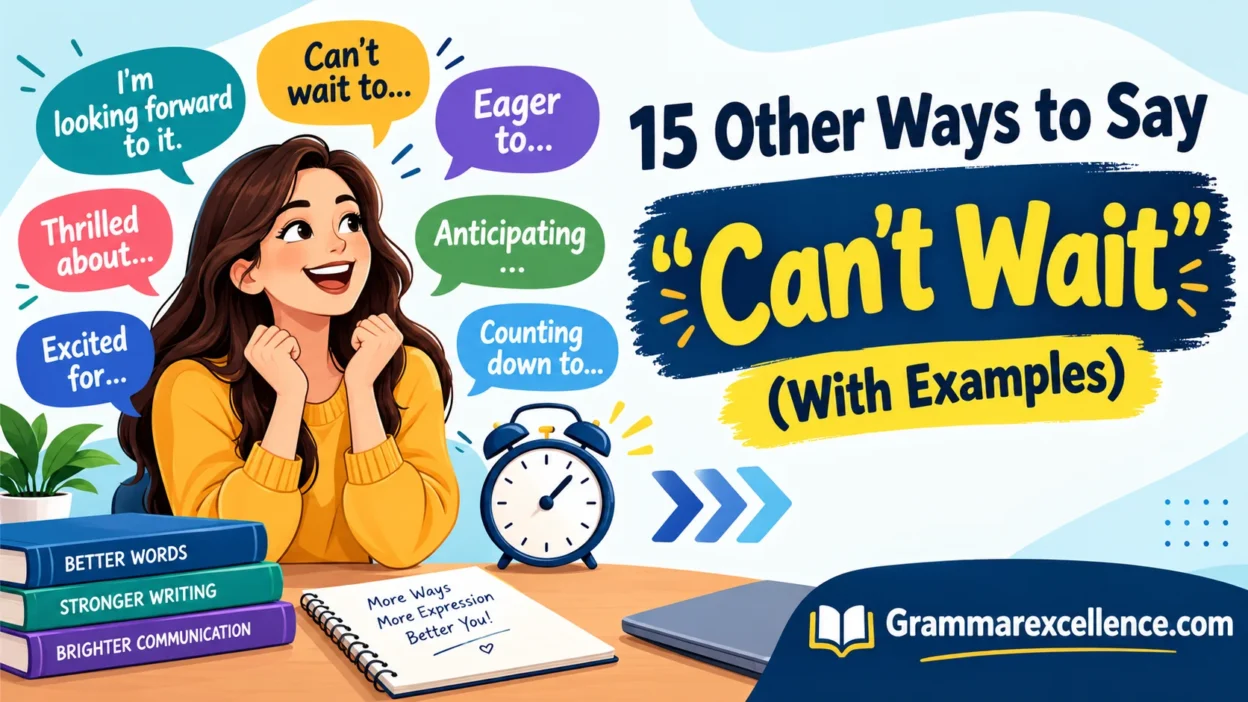
Can’t Wait is a simple phrase that expresses excitement, anticipation, and eagerness about something you are looking forward to. In everyday communication, it can make a message sound natural, warm, and personal.
The right wording can also make your message feel more professional, playful, or emotionally expressive, depending on the situation. From my experience, choosing a suitable alternative helps you connect, express, and elevate the tone of communication.
Whether you are talking with friends, colleagues, family, or someone special, expressive, thoughtful, and vibrant phrases can make casual messages feel more meaningful, engaging, and unforgettable while naturally conveying excitement, anticipation, and eagerness.
What Does “Can’t Wait” Mean?
“Can’t wait” is an informal expression meaning that someone is very excited about something that will happen in the future. It suggests strong anticipation and often communicates that the person is eager for the event, experience, meeting, or opportunity to arrive.
For example, “I can’t wait to see you” means “I’m very excited to see you.” The expression does not usually mean that someone is literally unable to wait. Instead, it is an emotional expression of enthusiasm and anticipation. Depending on the context, it can sound excited, warm, affectionate, or eager.
Common Situations Where “Can’t Wait” Is Used
“Can’t wait” is especially common in everyday conversation, texting, social media, and personal communication. Friends might say, “I can’t wait for the weekend,” while someone might text a partner, “I can’t wait to see you.”
It can also appear in workplace communication, particularly when colleagues already have a friendly relationship. However, more polished alternatives may be preferable in formal emails, professional announcements, or business writing. The best wording depends on the relationship, situation, and level of enthusiasm you want to communicate.
Is It Professional or Polite to Say “Can’t Wait”?
“Can’t wait” is generally polite and friendly, but it is also fairly casual and informal. It works naturally when speaking with friends, family members, classmates, customers you know well, or colleagues in relaxed communication.
In formal or highly professional writing, phrases such as “I look forward to,” “I am eager to,” or “I anticipate” may sound more appropriate. That does not make “can’t wait” rude; it simply gives the message a more conversational character.
Advantages and Disadvantages of Saying “Can’t Wait”
Advantages
The biggest advantage of “can’t wait” is its warmth and immediacy. It quickly communicates excitement without sounding complicated or overly formal. It is also familiar, easy to understand, and particularly natural in spoken English and text messages.
Disadvantages
The expression can sound too casual for some professional situations. It may also communicate strong excitement when a more restrained expression would be better. If used repeatedly, “can’t wait” can lose some of its emotional impact, making alternatives useful when you want more variety or a different tone.
Synonyms For “Can’t Wait”
- Looking forward to it
- I’m really excited about it
- I’m eager to
- I’m excited to
- I’m anticipating it
- I’m counting down the days
- I’m eagerly awaiting
- I’m so ready for
- I’m thrilled about
- I’m really looking forward to
- I’m excited for what’s ahead
- I’m eager to experience
- I’m looking forward to seeing you
- I’m excited to see what happens
- I’m waiting with excitement
1. Looking forward to it
Meaning
“Looking forward to it” expresses positive anticipation about something that is expected to happen.
Definition
It means to feel pleased and excited about something that will happen in the future.
Detailed Explanation
This is one of the most versatile alternatives to “can’t wait.” It can express enthusiasm without sounding overly emotional or informal. It is especially useful because it works in both friendly and professional communication. Compared with “can’t wait,” it usually sounds calmer and more polished.
Scenario Examples
Scenario: A colleague invites you to a meeting or event.
Example: “Thanks for the invitation. I’m looking forward to it.”
Scenario: A friend tells you about an upcoming trip.
Example: “That sounds amazing. I’m really looking forward to it.”
Best Use
Best for emails, conversations, invitations, work messages, and personal communication.
Tone
Tone: Warm, polite, versatile. It communicates enthusiasm without sounding excessive.
2. I’m really excited about it
Meaning
This expression directly communicates strong enthusiasm about something coming up.
Definition
It means feeling very happy and enthusiastic about a future event or experience.
Detailed Explanation
“I’m really excited about it” is more openly emotional than “looking forward to it.” It works particularly well when you want the other person to clearly understand how enthusiastic you are. It is natural in casual speech and personal messages.
Scenario Examples
Scenario: You have been invited to a concert.
Example: “The concert is next Friday, and I’m really excited about it.”
Scenario: You are starting a new project.
Example: “I’m really excited about it. I think we can create something great.”
Best Use
Best for casual conversation, texting, social media, and friendly workplace communication.
Tone
Tone: Enthusiastic, friendly, expressive. It makes your excitement very clear.
3. I’m eager to
Meaning
“I’m eager to” communicates a strong desire and willingness to do something.
Definition
It means being very interested in doing or experiencing something.
Detailed Explanation
This phrase can sound more polished than “can’t wait,” particularly in professional communication. It focuses not only on excitement but also on willingness and motivation. It is especially useful when discussing opportunities, responsibilities, learning, or future plans.
Scenario Examples
Scenario: You have been selected for a new project.
Example: “I’m eager to contribute to the team.”
Scenario: You are meeting a potential business partner.
Example: “I’m eager to discuss the possibilities with you.”
Best Use
Best for professional emails, interviews, academic settings, and formal conversations.
Tone
Tone: Professional, positive, motivated. It expresses enthusiasm in a controlled way.
4. I’m excited to
Meaning
“I’m excited to” shows enthusiasm about doing something in the future.
Definition
It means being very happy and enthusiastic about an upcoming action or experience.
Detailed Explanation
This expression is simple and extremely natural. It is often followed by a verb, such as “meet,” “visit,” “learn,” or “start.” Compared with “can’t wait,” it can sound slightly more straightforward and purposeful.
Scenario Examples
Scenario: You are visiting a friend.
Example: “I’m excited to see you this weekend.”
Scenario: You are beginning a course.
Example: “I’m excited to learn more about web development.”
Best Use
Best for personal messages, announcements, conversations, and friendly professional communication.
Tone
Tone: Positive, enthusiastic, natural. It is expressive without being overly dramatic.
5. I’m anticipating it
Meaning
“I’m anticipating it” means you are expecting and thinking about something that is going to happen.
Definition
It means to expect something with interest or attention.
Detailed Explanation
This phrase has a more measured feeling than “can’t wait.” It can communicate anticipation without necessarily suggesting intense excitement. In some contexts, it sounds more formal or literary, so it is not always the most natural choice for casual texting.
Scenario Examples
Scenario: You are waiting for an important announcement.
Example: “I’m anticipating the announcement with great interest.”
Scenario: A major event is approaching.
Example: “Everyone is anticipating the results.”
Best Use
Best for formal writing, serious discussions, announcements, and situations involving expectation.
Tone
Tone: Formal, measured, expectant. It is less casual than “can’t wait.”
6. I’m counting down the days
Meaning
This expression emphasizes that you are very excited about something approaching.
Definition
It means eagerly waiting for a particular future event to arrive.
Detailed Explanation
“I’m counting down the days” creates a vivid sense of excitement. It suggests that the event is important enough that you are actively thinking about how soon it will happen. It is more expressive and playful than a neutral phrase such as “I’m looking forward to it.”
Scenario Examples
Scenario: Your vacation is approaching.
Example: “I’m counting down the days until our beach trip.”
Scenario: A birthday is coming.
Example: “I’m counting down the days until my birthday!”
Best Use
Best for casual conversation, social media, texting, holidays, trips, birthdays, and special events.
Tone
Tone: Excited, playful, energetic. It strongly emphasizes anticipation.
7. I’m eagerly awaiting
Meaning
“I’m eagerly awaiting” means you are waiting with strong interest and anticipation.
Definition
It means waiting for something with considerable excitement or interest.
Detailed Explanation
This expression is stronger and more formal than “can’t wait.” It can work well when someone is waiting for news, a response, a decision, or an important event. However, it may sound somewhat formal in an ordinary text message between friends.
Scenario Examples
Scenario: You have submitted an application.
Example: “I’m eagerly awaiting your response.”
Scenario: A company is preparing to announce something.
Example: “Customers are eagerly awaiting the new product.”
Best Use
Best for professional communication, announcements, formal writing, and important updates.
Tone
Tone: Formal, enthusiastic, expectant. It combines excitement with a polished style.
8. I’m so ready for
Meaning
“I’m so ready for” expresses enthusiasm and suggests that you feel prepared and eager for something to happen.
Definition
It means being very prepared and excited for an upcoming experience.
Detailed Explanation
This expression is especially common in informal spoken English. It can communicate both anticipation and a feeling of readiness. It is slightly different from “can’t wait” because it emphasizes being prepared or mentally ready, not just wanting the event to arrive.
Scenario Examples
Scenario: You have finished a difficult workweek.
Example: “I’m so ready for the weekend.”
Scenario: Friends are planning a vacation.
Example: “I’m so ready for this trip!”
Best Use
Best for texting, casual conversation, social media, and personal communication.
Tone
Tone: Casual, energetic, enthusiastic. It sounds especially natural in everyday speech.
9. I’m thrilled about
Meaning
“I’m thrilled about” communicates very strong happiness and excitement.
Definition
It means being extremely pleased or excited about something.
Detailed Explanation
This expression is stronger emotionally than ordinary alternatives such as “looking forward to it.” It is useful when the upcoming event is genuinely important or exciting. Because “thrilled” is emotionally strong, it should not be used for every minor situation.
Scenario Examples
Scenario: Someone receives a new job opportunity.
Example: “I’m thrilled about the opportunity.”
Scenario: A couple is planning an important celebration.
Example: “We’re thrilled about the wedding.”
Best Use
Best for major personal news, celebrations, achievements, opportunities, and enthusiastic announcements.
Tone
Tone: Joyful, enthusiastic, celebratory. It conveys stronger emotion than “can’t wait.”
10. I’m really looking forward to
Meaning
This phrase communicates genuine anticipation while remaining natural and polite.
Definition
It means feeling happy and enthusiastic about something that will happen in the future.
Detailed Explanation
This is a slightly more emphatic version of “looking forward to it.” It works especially well when you want to sound enthusiastic without becoming overly casual. It can be used with people, events, meetings, trips, and opportunities.
Scenario Examples
Scenario: You are arranging a professional meeting.
Example: “I’m really looking forward to meeting you.”
Scenario: You are planning dinner with a friend.
Example: “I’m really looking forward to catching up.”
Best Use
Best for emails, professional communication, personal messages, meetings, and social plans.
Tone
Tone: Warm, polite, positive. It balances enthusiasm with good manners.
11. I’m excited for what’s ahead
Meaning
This expression communicates enthusiasm about future possibilities or upcoming experiences.
Definition
It means feeling positive and enthusiastic about what will happen in the future.
Detailed Explanation
Unlike “can’t wait,” this phrase does not necessarily focus on one specific event. It can describe a broader period of change, growth, or opportunity. That makes it useful when the future contains several possibilities rather than one clearly defined occasion.
Scenario Examples
Scenario: You are beginning a new chapter in your career.
Example: “I’m excited for what’s ahead in my new role.”
Scenario: Someone is moving to a new city.
Example: “It’s a big change, but I’m excited for what’s ahead.”
Best Use
Best for personal announcements, professional updates, social media, and conversations about future plans.
Tone
Tone: Optimistic, reflective, enthusiastic. It focuses on future possibilities.
12. I’m eager to experience
Meaning
“I’m eager to experience” expresses a strong desire to personally enjoy, discover, or participate in something.
Definition
It means being very interested in having a particular experience.
Detailed Explanation
This phrase is more specific than “can’t wait” because it focuses on the experience itself. It works particularly well when discussing travel, education, culture, events, or new activities. The wording is somewhat more polished than everyday expressions.
Scenario Examples
Scenario: You are traveling to another country.
Example: “I’m eager to experience the local culture.”
Scenario: You are joining a new training program.
Example: “I’m eager to experience the program and learn from the instructors.”
Best Use
Best for travel writing, professional communication, academic contexts, and thoughtful personal messages.
Tone
Tone: Curious, positive, thoughtful. It emphasizes the value of the upcoming experience.
13. I’m looking forward to seeing you
Meaning
This expression specifically communicates warm anticipation about meeting someone.
Definition
It means being happy and excited about seeing someone in the future.
Detailed Explanation
This is a particularly natural alternative when “can’t wait to see you” feels too casual or emotionally strong. It is warm without being excessive and can work between friends, relatives, colleagues, and acquaintances. The exact feeling depends on the relationship and surrounding message.
Scenario Examples
Scenario: You are visiting a family member.
Example: “I’m looking forward to seeing you next week.”
Scenario: You are meeting a colleague in person.
Example: “It was great speaking with you. I’m looking forward to seeing you at the conference.”
Best Use
Best for personal messages, professional emails, meetings, visits, and invitations.
Tone
Tone: Warm, respectful, friendly. It is more polished than the casual “can’t wait to see you.”
14. I’m excited to see what happens
Meaning
This phrase expresses enthusiasm and curiosity about an uncertain future outcome.
Definition
It means being interested and enthusiastic about discovering how a situation develops.
Detailed Explanation
This alternative is useful when you do not know exactly what will happen. Rather than simply waiting for a known event, you are looking forward to seeing the result. It combines anticipation with curiosity, which gives it a different feeling from “can’t wait.”
Scenario Examples
Scenario: Friends are trying a new restaurant.
Example: “I’m excited to see what happens when we try the chef’s special.”
Scenario: A new project is launching.
Example: “We’ve put a lot of work into it, and I’m excited to see what happens.”
Best Use
Best for projects, experiments, competitions, new experiences, conversations, and uncertain situations.
Tone
Tone: Curious, optimistic, informal. It focuses on discovering the outcome.
15. I’m waiting with excitement
Meaning
“I’m waiting with excitement” describes waiting eagerly for something to happen.
Definition
It means waiting for an event while feeling enthusiastic or excited about it.
Detailed Explanation
This phrase clearly communicates anticipation, although it is less idiomatic in everyday English than “I can’t wait” or “I’m looking forward to it.” It can work when you intentionally want to emphasize the emotional experience of waiting. In ordinary conversation, a more natural alternative may be preferable.
Scenario Examples
Scenario: You are waiting for an important personal announcement.
Example: “I’m waiting with excitement to hear the news.”
Scenario: A child is waiting for a special event.
Example: “The children are waiting with excitement for the show to begin.”
Best Use
Best for descriptive writing, storytelling, emotional messages, and situations where anticipation itself is the focus.
Tone
Tone: Emotional, expressive, slightly literary. It highlights the feeling of anticipation.
FAQs
Q1. What is another way to say “Can’t Wait”?
Common alternatives include “looking forward to it,” “I’m really excited about it,” “I’m eager to,” and “I’m counting down the days.” The best choice depends on whether you want to sound casual, professional, warm, or highly enthusiastic.
Q2. What does “Can’t Wait” mean?
“Can’t wait” means being very excited or eager for something to happen. It is normally an idiomatic expression rather than a literal statement about being unable to wait.
Q3. Is “Can’t Wait” professional?
“Can’t wait” is friendly and polite but generally informal. It can work in relaxed workplace communication, but a phrase such as “I’m looking forward to it” is often more suitable for formal emails.
Q4. What is a more polite way to say “Can’t Wait”?
“I’m looking forward to it” is one of the most natural polite alternatives. It expresses positive anticipation while sounding respectful and appropriate in both personal and professional settings.
Q5. Which alternative works best in formal communication?
“I’m looking forward to…” and “I’m eager to…” are usually strong choices for formal communication. They communicate enthusiasm while maintaining a professional tone.
Conclusion
Using Can’t Wait or a suitable alternative depends on the feeling, relationship, and situation behind your words. Whether you want to express excitement, anticipation, or eagerness, thoughtful wording can make your communication feel more natural, personal, and meaningful. Choosing the right expression helps you create a message that clearly reflects your tone and connection with others.